





No products in the cart.
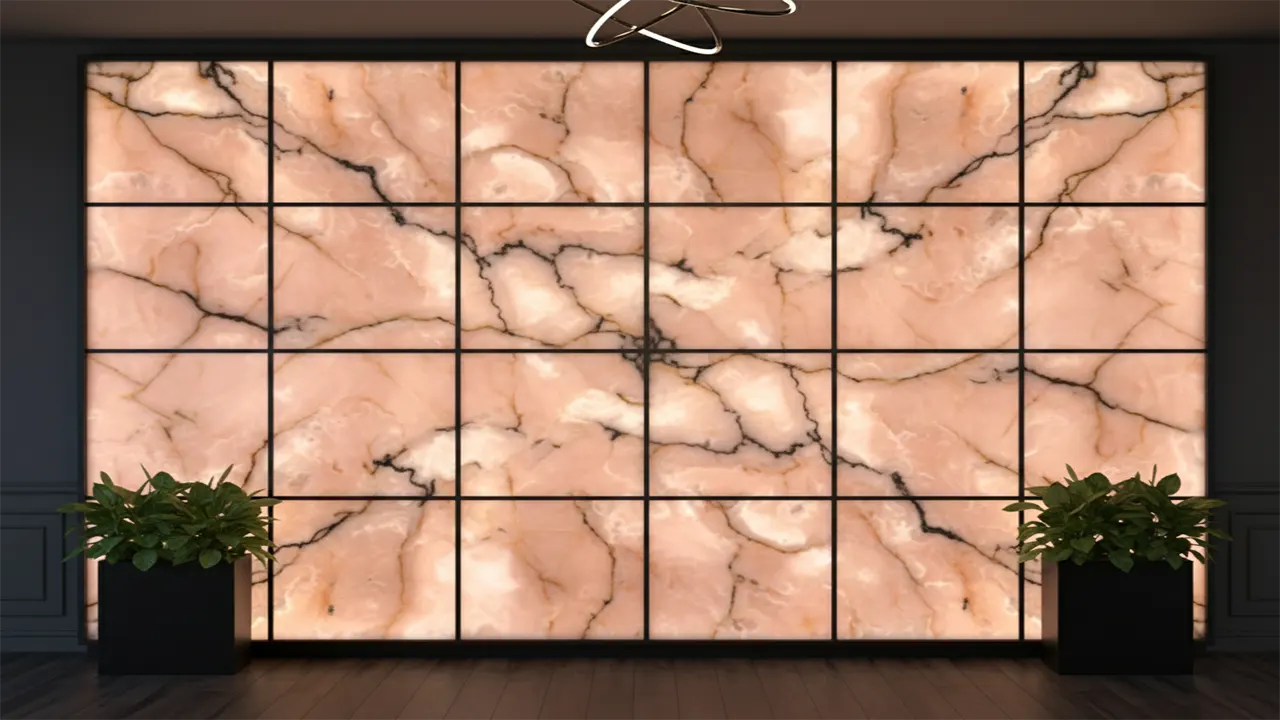
Natural onyx stands among the most captivating stones used in architecture and interior design. Its layered translucence, warm color variations, and artistic veining make it a preferred choice for designers seeking a sophisticated and expressive natural material. This guide explores the essential characteristics, varieties, cultural roots, and modern uses of natural onyx slab, with a special look at the qualities that distinguish Iranian onyx.
What Is Natural Onyx?
Natural onyx (also called calcite onyx or architectural onyx) is a sedimentary stone formed through the slow precipitation of calcium carbonate from water in caves or mineral-rich environments. Its layered appearance results from repeated mineral deposition over thousands of years.
Unlike black onyx used in jewelry—an unrelated variety of chalcedony—architectural onyx is primarily calcite-based, softer, and much more translucent.
Key Characteristics of Natural Onyx
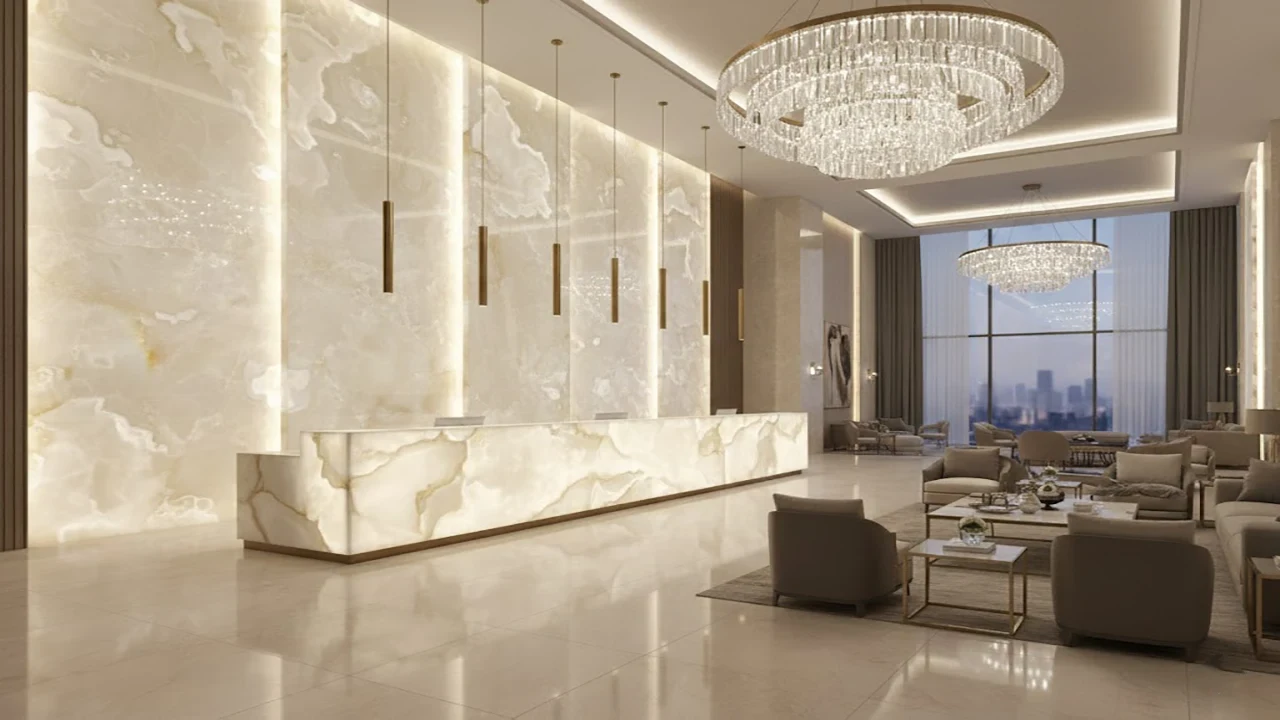
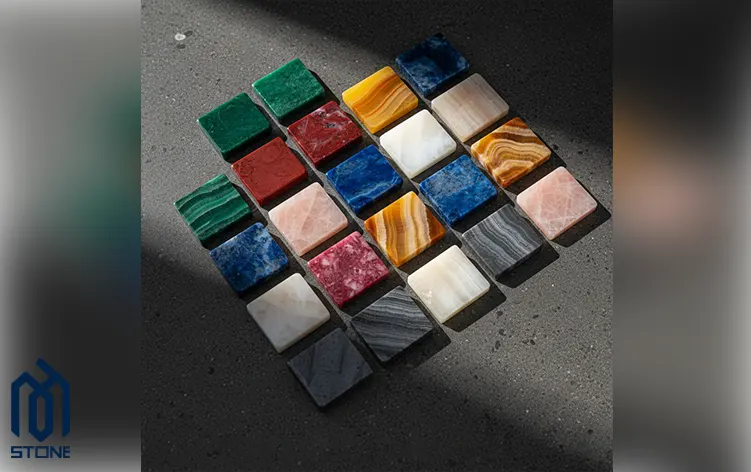
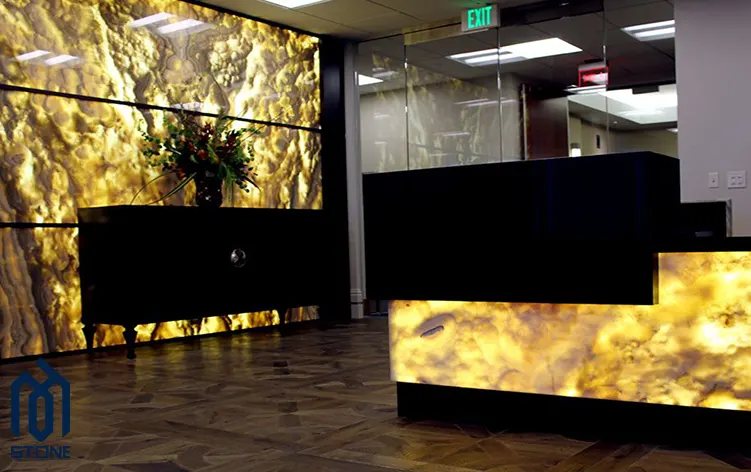
What sets natural onyx apart is its ability to transform a space not only visually but also emotionally. Its layers create a soft glow when backlit, while the surface, once polished, reflects a mirror-like shine. The stone’s veining ranges from subtle waves to bold contrasts, offering distinctive aesthetics for artistic installations.
Although softer than granite or marble, this softness also allows for detailed sculpting and customized forms. Like many calcite stones, onyx reacts to acidic substances and therefore benefits from gentle maintenance and neutral cleaners.
Popular Varieties of Natural Onyx
Natural onyx appears in a wide spectrum of colors and patterns. Some of the most recognized varieties include:
- White Onyx – clean, luminous, and ideal for minimalist interiors
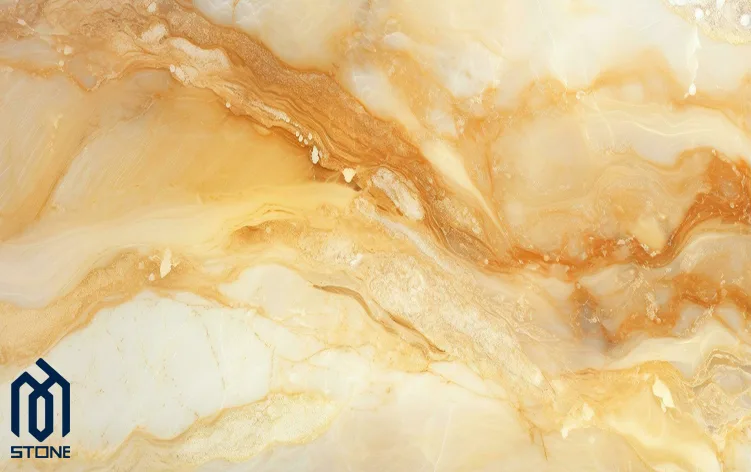
- Honey Onyx – warm and glowing, perfect for calming spaces
- Green Onyx – unique and artistic, often chosen for luxury features
- Amber or Golden Onyx – rich in depth and natural texture
- Pink Onyx – elegant and rare
- Multi-Color or Rainbow Onyx – dynamic layers of multiple tones
- Aragonite-Onyx Mixes – swirling patterns with heavier mineral movement
Each variety has its own aesthetic personality, making onyx a versatile stone for creative design.
Why Iranian Onyx Holds a Global Reputation
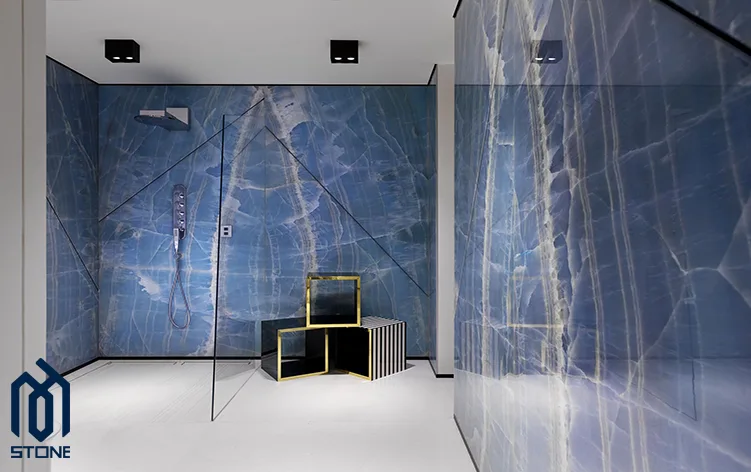
Iran is home to some of the world’s most admired onyx deposits, including pink onyx slab and white onyx slab, known for clarity, strong translucence, and naturally harmonious veining. Designers and architects frequently select Iranian onyx for luxury interiors across Europe, the Middle East, and Asia because of its visual consistency and the availability of large-format slabs suitable for grand projects.
A Cultural Legacy behind the Stone
Onyx has been part of Persian craftsmanship for centuries. Historical buildings, palaces, and places of worship across Iran display intricate onyx carvings, columns, and decorative features. The stone is deeply intertwined with Persian artistry, enhancing its cultural and aesthetic value.
Modern Design Applications of Natural Onyx
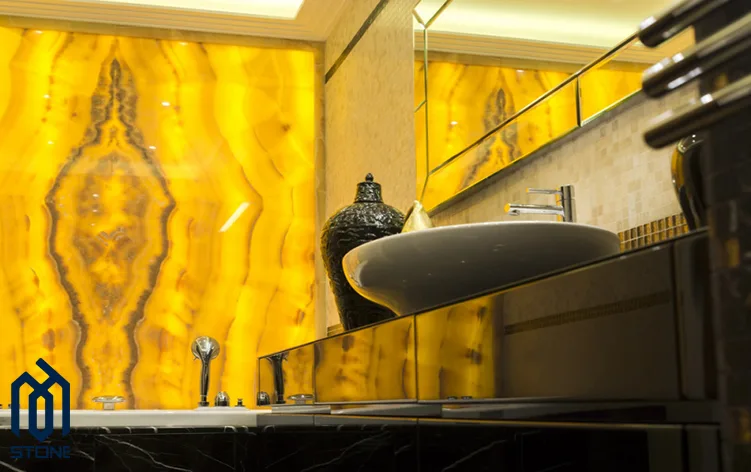
Today, onyx is prized for its ability to bring warmth and refinement into contemporary spaces. Designers use it for statement walls, backlit panels, bathroom vanities, fireplace surrounds, reception counters, and sculptural forms. Its semi-translucent layers make it especially appealing in hotels, luxury residences, spas, and yachts where dramatic visual effects are desired.
How to Evaluate the Quality of Onyx
When choosing natural onyx, designers often examine the veining pattern to ensure it appears artistic rather than disorderly. Uniform color distribution typically indicates high quality, and strong translucence enhances the stone’s aesthetic potential. Checking for cracks or extensive filler is essential when evaluating slabs. Many professionals prefer Iranian-origin slabs as a reliable premium choice due to their clarity and structure.
Onyx vs. Other Natural Stones
| Stone | Translucent | Aesthetic Variety | Hardness | Best Use |
| Onyx | Yes | Very High | Low–Medium | Decorative and illuminated features |
| Marble | No | Medium | Medium | Floors, countertops, architectural elements |
| Granite | No | High | Very High | Heavy-use surfaces |
| Travertine | No | Low–Medium | Medium | Walls and rustic designs |
What Influences the Value of Natural Onyx?
Several factors impact the value of onyx: depth of color, clarity, and the degree of translucence, slab size, and the craftsmanship involved in finishing. Stones sourced from regions with a long-standing tradition—such as Iran—are often considered premium due to their visual uniformity and geological quality.
Sustainability and Responsible Quarrying
Many Iranian quarries, particularly those operated in smaller provinces, still follow traditional, low-impact extraction methods. These practices reduce environmental disturbance and support local communities, adding an ethical dimension to choosing natural onyx.
Is Natural Onyx the Right Choice for Your Project?
Natural onyx is ideal for projects that require a combination of elegance, originality, and atmosphere. Its ability to glow when illuminated, along with its rich cultural background, makes it a meaningful material for designers who want to create memorable spaces with emotional depth.
If you are looking to buy high-quality onyx slabs at a reasonable price, Mot Stone is a trusted supplier of natural onyx that works with clients in multiple countries around the world. Contact us today.

Frequently Asked Questions
1. Is Iranian onyx superior in quality?
It’s widely recognized for its clarity, translucence, and consistent veining.
2. Can onyx be used for flooring?
Yes, but it performs best in low-traffic areas.
3. Does onyx cost more than marble?
High-grade onyx, especially translucent varieties, is generally more expensive.
4. How should onyx be cleaned?
A soft cloth and neutral cleaner are recommended to avoid etching.
5. Does onyx fade in sunlight?
Prolonged direct sunlight may result in slight color changes.
Related Posts
December 31, 2025
What Is White Onyx?
White Onyx is widely recognized as one of the most visually striking natural stones used…