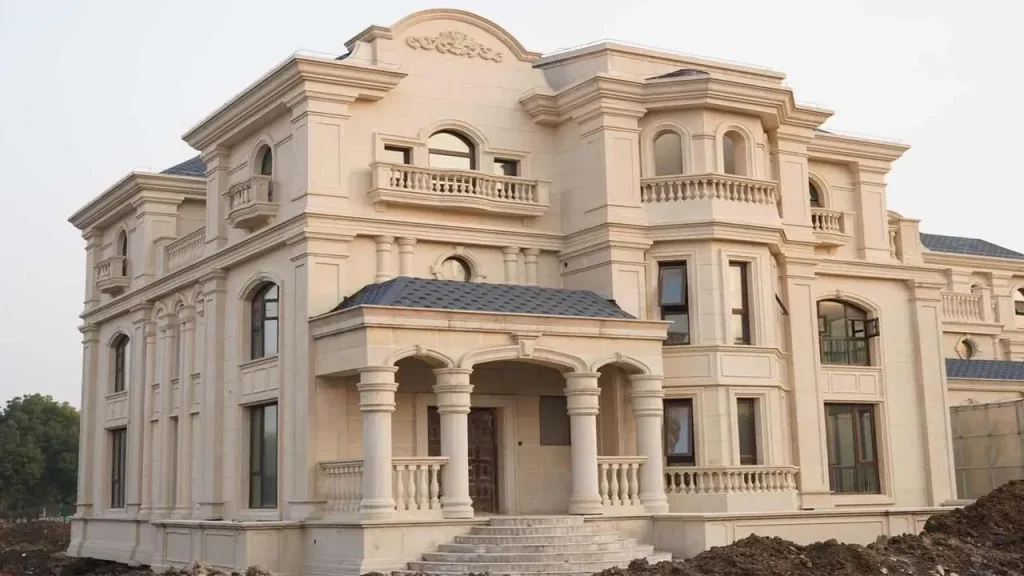
Choosing the right limestone for exterior cladding requires more than selecting a color or appearance. A suitable limestone facade must provide durability, weather resistance, low maintenance requirements, and a design that matches the architectural vision.Factors such as water absorption, density, surface finish, climate conditions, and stone performance play an important role in selecting the right limestone for exterior walls.
This guide explains the key criteria for choosing limestone cladding, compares different natural stones, and helps architects and project developers select the most suitable limestone for their facade projects.
Key Performance Factors for Limestone Exterior Cladding
When specifying limestone for exterior cladding, performance should always take precedence over appearance. Even the most visually attractive stone can lead to premature deterioration and costly maintenance if it cannot tolerate outdoor exposure, regardless of its initial limestone slab price.
Weather Resistance and Climate Compatibility
Exterior limestone must be selected based on the climate conditions of the project location. Temperature fluctuations, freeze-thaw cycles, rainfall, humidity, air pollution, and UV exposure all affect stone behavior.
In colder climates, limestone with low water absorption is essential to prevent cracking caused by freeze-thaw expansion. In hot or arid regions, thermal stability and resistance to surface discoloration become more important.
A limestone facade material suitable for exterior use typically has:
- Moderate to low porosity
- Stable mineral composition
- Proven performance in similar climates
Ignoring climate compatibility is one of the most common causes of façade failure in natural stone cladding projects.
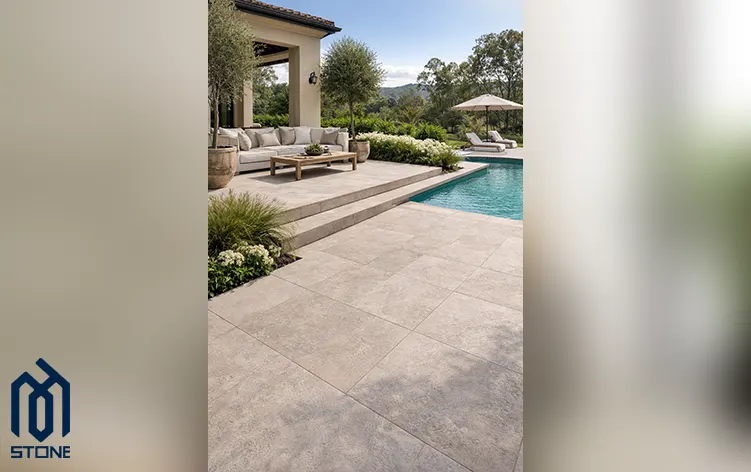
Porosity and Water Absorption
Porosity is one of the most critical technical factors in limestone for exterior cladding. Highly porous stones absorb moisture more easily, increasing the risk of staining, biological growth, and weather-related damage.
Lower-porosity limestone performs better in exterior environments because it:
- Reduces water penetration
- Minimizes freeze-thaw damage
- Improves long-term color stability
However, very dense limestone may limit vapor permeability, so balance is key. Architects should always review absorption test data before final specification.
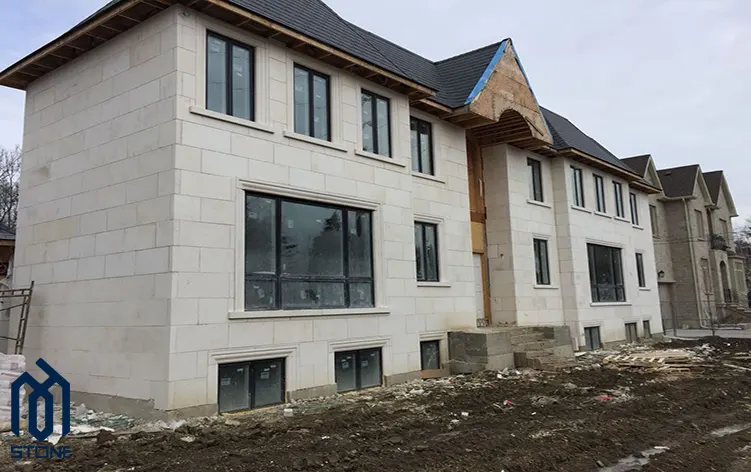
Limestone vs Other Natural Stones for Facades
Limestone is often compared with other natural stone cladding options such as granite, marble, and travertine. Each stone type has its own strengths, but limestone offers a distinct balance between performance and architectural flexibility.
Limestone vs Granite
Granite is extremely dense and durable, making it suitable for harsh environments. However, its hardness and visual intensity can feel heavy in architectural compositions.
Limestone, by contrast:
- Offers softer, more natural color palettes
- It is easier to cut and detail
- Integrates more naturally into both classical and modern designs
For architects seeking subtle elegance rather than visual dominance, limestone for exterior cladding is often preferred.
Limestone vs Marble
While marble and limestone are both calcium-based stones, marble generally has a higher density and lower porosity. However, marble façades are more prone to surface etching and color inconsistency in outdoor conditions.
Exterior limestone stone typically:
- Ages more predictably
- Shows natural patina rather than aggressive degradation
- Requires less specialized maintenance
This makes limestone a more forgiving and practical choice for large-scale facades.
Limestone vs Travertine
Travertine is visually distinctive due to its voids and linear patterns. However, its open structure often requires extensive filling and sealing for exterior use.
Limestone facade material offers:
- More uniform density
- Greater design consistency
- Lower risk of long-term surface breakdown
For projects prioritizing clean lines and minimal surface intervention, limestone is usually the safer option.
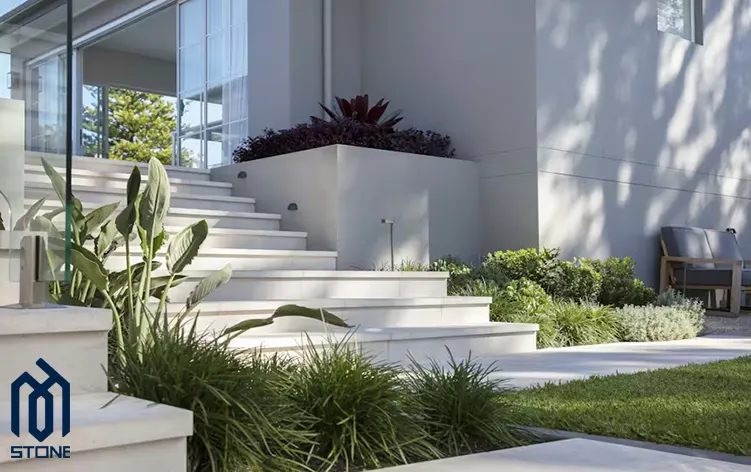
How Color and Texture Affect Limestone Exterior Cladding
Color and texture are important factors when selecting limestone for exterior facades. The right combination can improve the visual appearance of a building while maintaining harmony with surrounding materials and architectural style.
Color Stability in Exterior Conditions
Light-colored limestone is commonly chosen for exterior cladding because it creates a clean and timeless appearance. However, color stability should also be considered, especially in areas exposed to moisture, pollution, and weather changes.
High-quality limestone for exterior cladding should demonstrate:
- Minimal oxidation
- Resistance to yellowing or dark streaks
- Even weathering over time
- Low oxidation
- Resistance to discoloration
- Consistent appearance over time
Selecting quarry-proven stone with a history of exterior use reduces the risk of unexpected discoloration.
Texture and Surface Movement
The surface finish and texture of limestone play an important role in both the appearance and performance of exterior cladding. The right finish can improve durability, reduce dirt accumulation, and provide better suitability for different outdoor conditions.
While polished limestone finishes are commonly used for interior applications, exterior facades usually require more practical finishes that provide better weather resistance and surface performance.
Common limestone finishes for exterior cladding include:
- Honed: A smooth matte surface that creates a modern appearance with controlled light reflection.
- Sandblasted: A textured finish that improves slip resistance and provides a natural exterior look.
- Brushed or Bush-hammered: A textured surface that enhances grip and improves performance in demanding outdoor environments.
The selected finish should match the project requirements, climate conditions, and architectural design. Proper surface treatment helps limestone facade materials maintain their appearance and functionality over time.
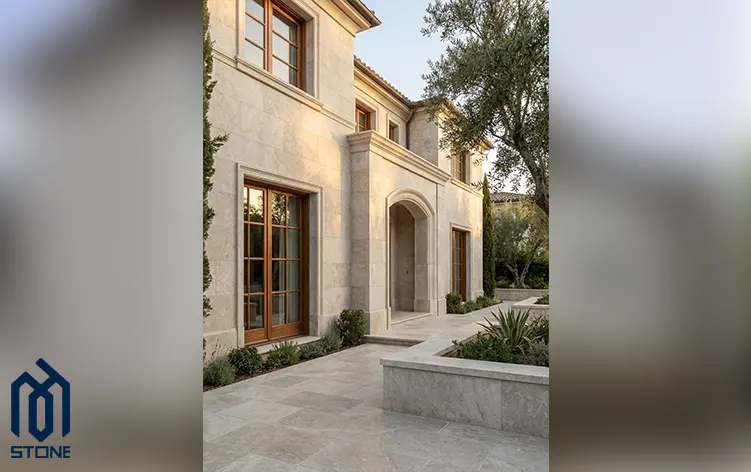
When to Choose Premium Limestone for Exterior Facades
Premium limestone is recommended for exterior facade projects where consistency, durability, and long-term appearance are important.
For large residential, commercial, and architectural projects, higher-grade limestone provides better control over:
- Color consistency across large surfaces
- Uniform texture and pattern
- Weather performance
- Long-term maintenance requirements
Premium limestone is especially suitable for projects where the facade is highly visible and the quality of the natural stone directly affects the overall architectural appearance.
Premium Limestone for Large-Scale Facade Projects
In large facade applications, selecting limestone from a reliable quarry helps achieve better color continuity, predictable installation results, and reduced material waste during construction.Before final selection, architects and contractors should review stone samples, technical specifications, and previous exterior applications.
In many architectural projects, designers specify gohara limestone as a reliable option because it balances durability, controlled porosity, and refined visual character. When integratedthoughtfully into facade systems, Gohara limestone performs well in exterior cladding applications while maintaining architectural elegance.
Conclusion
Selecting limestone for exterior cladding is not a purely aesthetic decision. It requires a comprehensive understanding of environmental conditions, material properties, finishing techniques, and architectural intent.
By prioritizing performance factors, comparing limestone with alternative stones, and evaluating color and texture in context, architects and project designers can specify exterior limestone with confidence.
When chosen correctly, natural stone cladding—especially high-quality limestone facade material—becomes more than an exterior finish. It becomes a lasting architectural statement that matures gracefully over time.
Frequently Asked Questions About Limestone Exterior Cladding
Is limestone suitable for exterior cladding?
Yes, limestone is suitable for exterior cladding when the stone has appropriate strength, low water absorption, and the right surface finish for the project conditions.
How do I choose the right limestone for a facade?
The right limestone facade material should be selected based on water absorption, durability, climate conditions, color stability, surface finish, and the architectural requirements of the project.
What is the best limestone finish for exterior walls?
Honed, sandblasted, brushed, and bush-hammered finishes are commonly used for exterior limestone cladding because they provide better weather performance and surface functionality.
How does limestone compare with granite for exterior cladding?
Limestone offers a warmer appearance and easier processing, while granite generally provides higher density and strength. The best choice depends on the project requirements, climate, and desired appearance.