





No products in the cart.
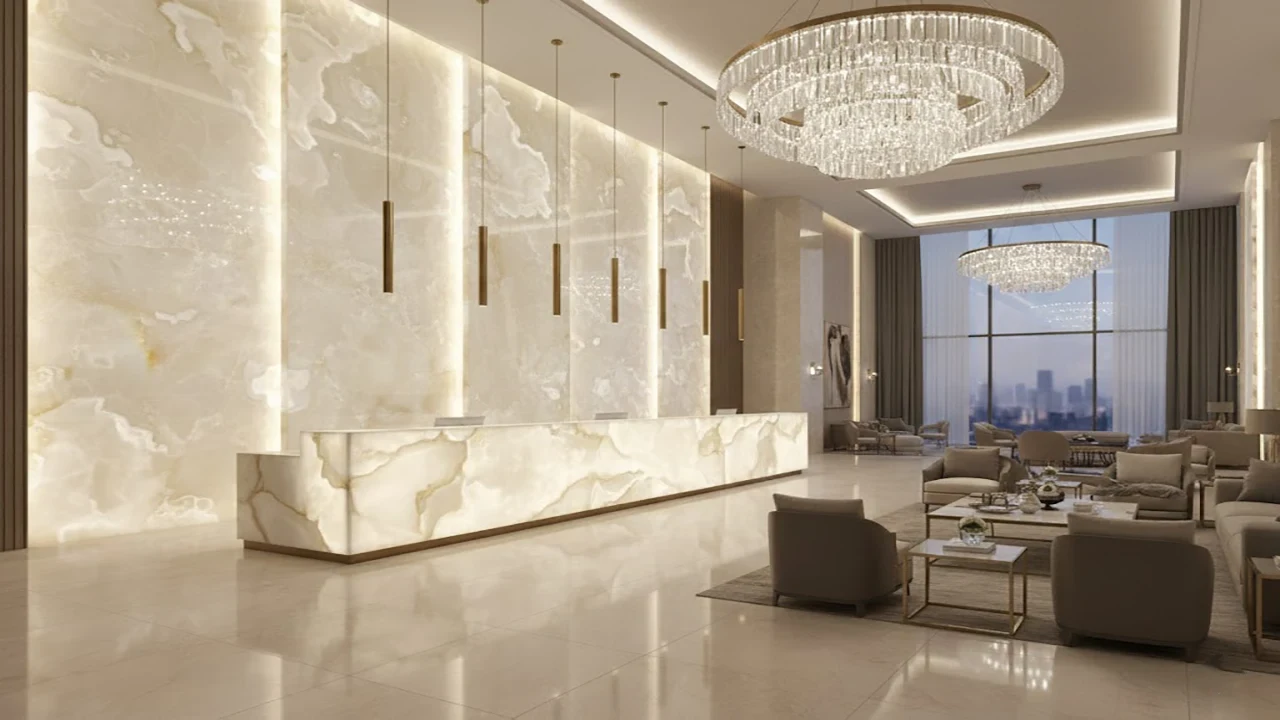
White Onyx is widely recognized as one of the most visually striking natural stones used in architecture and interior design. Its soft white tones, layered veining, and unique translucency distinguish it from other white stones commonly used in construction.
While often associated with luxury and high-end projects, White Onyx is not merely an aesthetic material—it is a geological formation with distinct physical properties, specific architectural applications, and clear limitations that designers and project planners must be aware of.
This article offers a comprehensive, experience-based explanation of what White Onyx is, its formation process, defining characteristics, and its applications in architectural and interior design projects. The goal is to give architects, designers, consultants, and B2B buyers a clear, technically accurate understanding of White Onyx without focusing on pricing or sales-driven language.
What Is White Onyx?
White Onyx is a banded, translucent stone formed primarily from calcium carbonate deposits. Unlike marble or travertine, which are typically opaque, onyx is valued for its ability to transmit light when cut and finished properly. This translucency gives White Onyx its distinctive visual depth and allows it to be used in backlit and feature applications where light becomes part of the design itself.
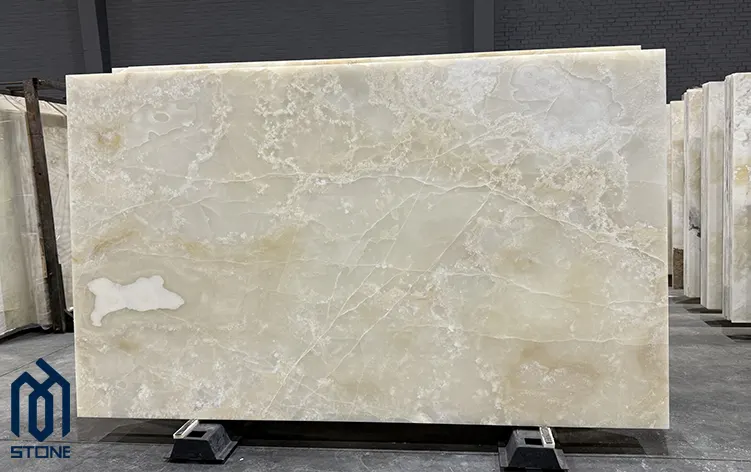
From a geological standpoint, onyx belongs to the same family as limestone but differs in structure and appearance. Its layered formation creates natural bands, clouds, and veining patterns that vary from slab to slab. These natural variations are not defects; they are intrinsic characteristics that contribute to the uniqueness of each architectural installation.
In architectural contexts, a white onyx slab is classified as a decorative and feature-oriented material rather than a structural one. It is selected primarily for visual impact, spatial enhancement, and artistic expression rather than load-bearing performance.
How Is White Onyx Formed?
Understanding onyx stone formation is essential for appreciating both its beauty and its limitations. White Onyx forms through the slow precipitation of calcium carbonate from mineral-rich water, typically in cave systems, hot springs, or areas with active groundwater flow.
Over time, as water drips or flows across surfaces, minerals crystallize and settle in thin layers. These layers gradually build up, creating the characteristic banded structure of onyx. Variations in mineral content, water flow, and environmental conditions result in differences in color intensity, translucency, and veining.
Because this formation process occurs under relatively low pressure compared to metamorphic stones, onyx remains softer and more delicate. This explains why White Onyx offers exceptional visual qualities but requires careful handling, processing, and application in architectural projects.
Key Properties of White Onyx
White Onyx properties play a critical role in determining where and how it should be used. From a technical perspective, its characteristics are best understood in relation to both its strengths and constraints.
Translucency and Backlit White Onyx Applications
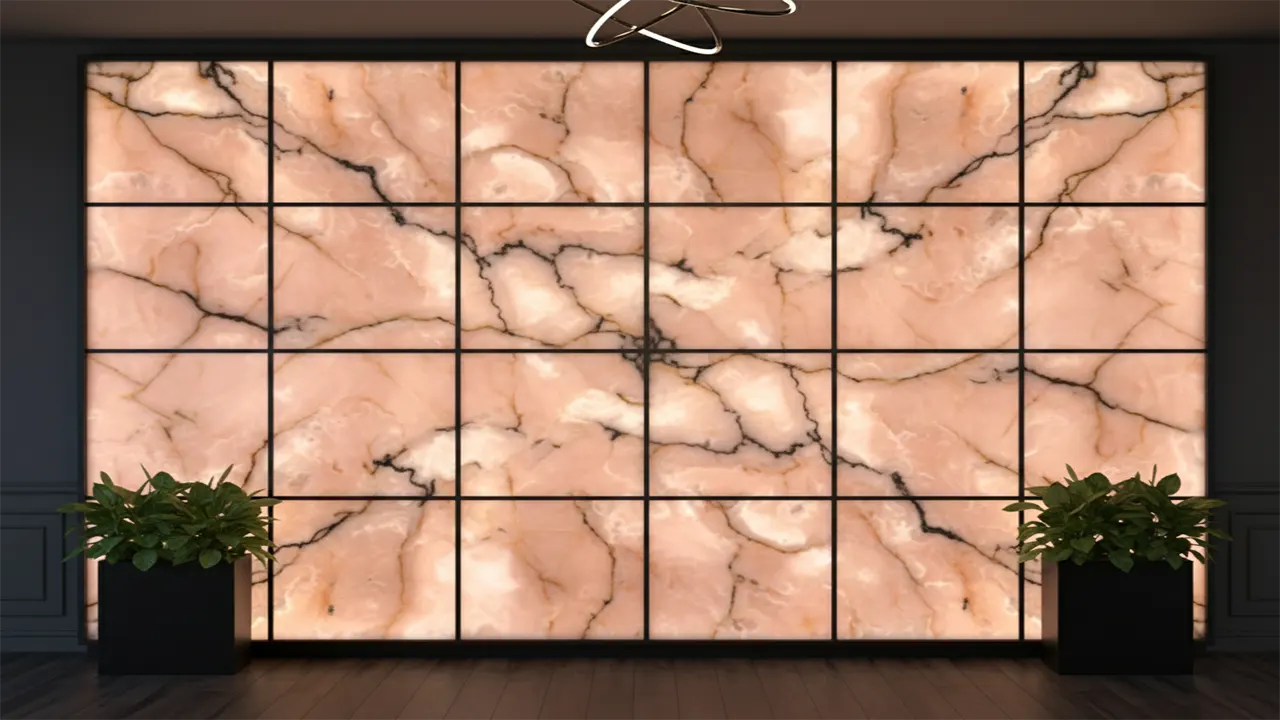
One of the most defining features of White Onyx is its ability to transmit light. When properly processed, thin sections of onyx can glow softly when illuminated from behind, making it ideal for backlit onyx applications.
Natural Color Variation and Veining Patterns in White Onyx
White Onyx is never uniform. Natural banding, cloudy textures, and subtle tonal shifts are expected and often desired. Designers typically select slabs with specific visual movement to achieve artistic continuity in large surfaces.
Surface Finish Options and Visual Performance of White Onyx
White Onyx responds particularly well to polished finishes, which enhance light reflection and depth. Honed finishes are possible, but reduce translucency and visual impact.
Mechanical Sensitivity and Structural Limitations of White Onyx
Compared to marble or granite, White Onyx is more fragile. It has lower resistance to impact, abrasion, and chemical exposure, which directly affects its architectural use.
Decorative Stone Classification and Architectural Role of White Onyx
Due to its physical characteristics, White Onyx is categorized as a decorative onyx surface rather than a general-purpose construction stone.
White Onyx vs Other White Natural Stones
In architectural decision-making, White Onyx is often evaluated alongside other white stones. Understanding these differences helps prevent misuse and unrealistic expectations.
White Marble offers higher strength and durability, making it suitable for floors and high-traffic areas. However, it lacks translucency and does not achieve the same visual depth.
White Travertine is more porous but mechanically stable and widely used in exterior and interior cladding. Its appearance is more uniform and understated compared to onyx.
White Onyx, by contrast, excels in visual expression. It is not intended to replace marble or travertine in functional roles but to complement them in focal and artistic applications.
Common Applications of White Onyx in Architecture
White Onyx applications in architecture are closely tied to its decorative nature. It is most effective when used selectively, where visual impact is prioritized over mechanical performance.
Common architectural uses include:
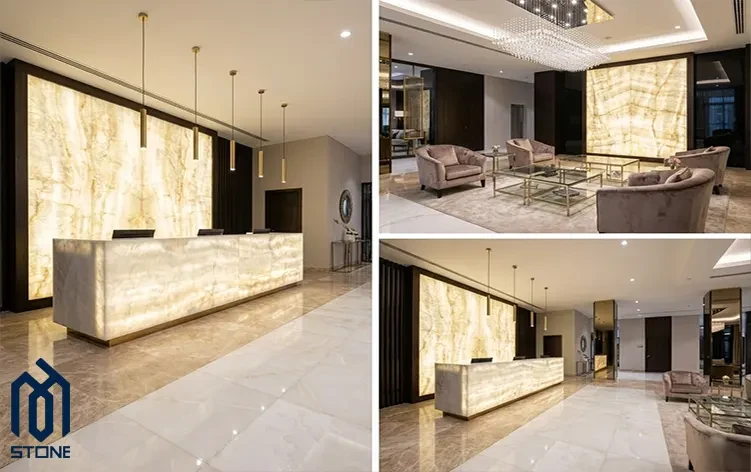
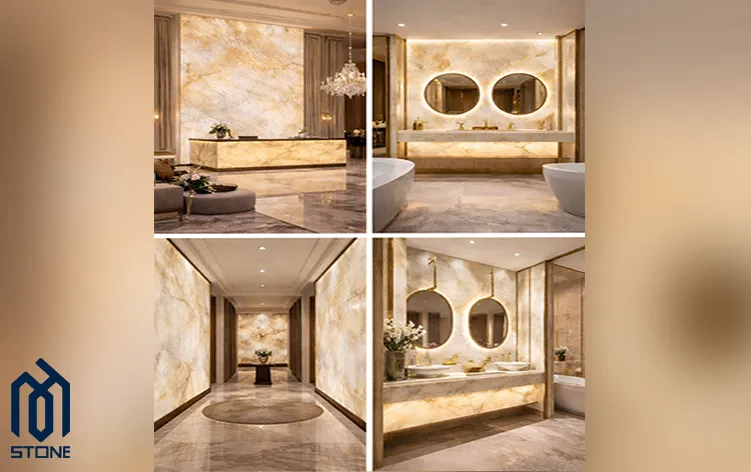
- Interior feature walls in hotels, villas, and commercial spaces
- Backlit panels in lobbies, corridors, and reception areas
- Bathroom wall cladding where controlled lighting enhances the ambiance
- Decorative partitions and artistic installations
- Accent surfaces in luxury retail and hospitality projects
In all cases, White Onyx is used as a visual centerpiece rather than a background material.
Why Designers Choose White Onyx for Luxury Projects
From an architectural perspective, the appeal of White Onyx lies in its emotional and experiential qualities. Designers select it not for practicality, but for its ability to transform space.
White Onyx interacts with light in ways that few natural stones can. When illuminated, it creates a warm, diffused glow that enhances spatial depth and atmosphere. This makes it particularly valuable in luxury interior stone design, where ambiance and sensory experience are as important as form.
Additionally, the inherent uniqueness of each slab supports exclusivity—an essential factor in high-end residential and hospitality projects. No two installations are ever identical, reinforcing the bespoke nature of the design.
Is White Onyx Suitable for Exterior Use?
From a technical standpoint, White Onyx is generally not recommended for exterior applications. Its sensitivity to moisture, temperature fluctuations, and environmental exposure limits its performance outdoors.
Factors such as freeze-thaw cycles, UV exposure, and airborne pollutants can accelerate deterioration. For this reason, architectural use of onyx is best confined to controlled interior environments where temperature, humidity, and lighting can be managed.
In rare cases, onyx may be used in semi-exterior spaces with full protection, but this requires careful engineering assessment and ongoing maintenance.
How to Maintain and Care for White Onyx
Proper maintenance is essential to preserving the appearance and longevity of White Onyx installations.
- Use pH-neutral cleaning agents only
- Avoid acidic or abrasive substances
- Apply professional sealing systems to reduce staining risk
- Clean spills immediately to prevent absorption
- Schedule periodic inspections in high-visibility areas
With appropriate care, White Onyx can retain its visual quality for decades in interior architectural applications.
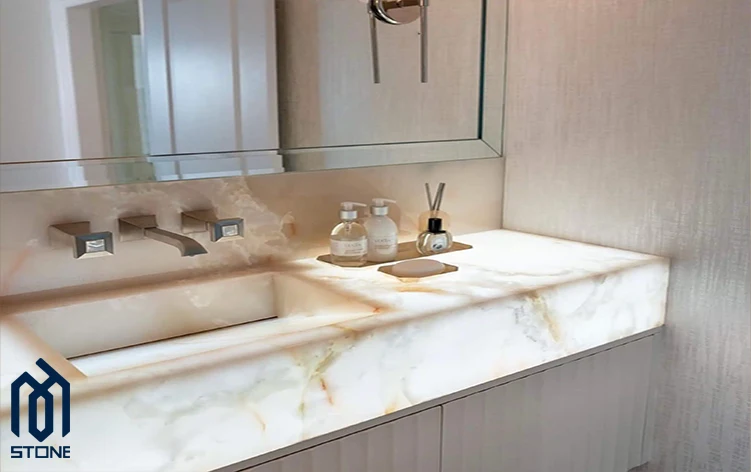
White Onyx in Modern Interior Design Trends
In contemporary architecture, White Onyx is increasingly used as a statement material rather than a dominant surface. Current trends emphasize selective placement, integration with lighting, and contrast with minimalist materials such as concrete, wood, and metal.
Backlit onyx applications have become especially popular in modern villas, luxury offices, and hospitality interiors, where lighting design plays a central role. Rather than overwhelming a space, designers use White Onyx strategically to guide visual focus and enhance spatial identity.
Conclusion
White Onyx is a material defined by visual expression rather than structural performance. Its translucency, layered formation, and natural variation make it one of the most distinctive decorative stones available to architects and designers.
When used correctly—within its technical limitations and in appropriate interior settings—White Onyx can elevate architectural projects, create memorable spaces, and deliver a level of refinement that few materials can match. Understanding its properties, formation, and architectural role is essential for making informed design decisions and achieving long-term project success.
Related Posts
August 4, 2025
Natural Onyx Stone Buying Guide
Natural onyx stands among the most captivating stones used in architecture and interior design. Its…