Choosing the right natural stone for pools is an important decision in architectural projects where water exposure, safety, and visual appeal must be considered together. From luxury swimming pools and outdoor pool decks to spa facilities and wellness centers, natural stone can create elegant, durable surfaces that complement both modern and traditional designs.
However, not every natural stone performs equally well in wet environments. Factors such as water absorption, slip resistance, surface texture, and exposure to pool chemicals can significantly affect the suitability of a material. For example, travertine is often considered for pool surrounds, while certain granites can provide durable flooring solutions for high-traffic wet areas when properly finished and specified.
Selecting natural stone for pools and wet areas therefore requires more than choosing an attractive color or pattern. Architects, interior designers, and project buyers must understand the characteristics of different stone types and how they perform under specific environmental conditions.
In this guide, MOT Stone explores the best natural stone options for swimming pools, pool surrounds, spas, and other moisture-prone spaces. We also examine their architectural applications and the key factors to consider when selecting suitable materials for residential and commercial projects.
What Makes Natural Stone Suitable for Pools and Wet Areas?
Not every natural stone is suitable for environments exposed to frequent moisture. Some varieties have a dense structure and naturally low water absorption, while others require additional protection and more careful maintenance.Before selecting a material, it is important to evaluate several technical characteristics that determine its suitability for wet environments.
Water Resistance and Porosity
Water absorption is one of the most important factors when selecting natural stone for swimming pools and wet areas.Porous stones can absorb moisture, potentially leading to staining, discoloration, mineral deposits, and deterioration over time. However, porosity alone does not determine whether a stone is suitable for a particular application. Proper installation, sealing, drainage, and environmental conditions also play important roles.
Granite generally has a dense structure and relatively low water absorption, making it a practical choice for many outdoor applications. Travertine and limestone, on the other hand, may have more open pore structures and often require appropriate selection and protective treatments.When purchasing natural stone, check its water absorption specifications and confirm that the material is suitable for its intended application.
Slip Resistance and Surface Texture
Safety is essential in areas where floors are frequently exposed to water. Pool decks, shower floors, and outdoor walkways should provide adequate traction to reduce the risk of slipping.The surface finish significantly influences slip resistance. Highly polished stone can become slippery when wet, while appropriately textured finishes may provide better grip.
Common finishes include:
Flamed: Creates a rough texture, particularly suitable for certain granite applications.
Brushed: Produces a slightly textured surface with a natural appearance.
Honed: Provides a smooth, matte finish that may be suitable for selected wet-area applications after testing.
Tumbled: Creates an aged appearance with softened edges and a textured surface.
The best finish depends on the installation location, expected foot traffic, and applicable safety requirements.
Durability Against Chemicals and Weather
Natural stone used around swimming pools must withstand regular exposure to moisture, sunlight, temperature changes, and pool maintenance chemicals.Outdoor installations may also face freezing temperatures, heavy rainfall, and repeated wet-dry cycles.
Granite is generally resistant to abrasion and many environmental conditions. However, marble, limestone, and travertine contain calcium-based minerals that can react with acidic substances and certain cleaning chemicals.
For swimming pool projects, it is important to consider the chemical composition of the stone and its compatibility with the pool water treatment system.Proper installation and suitable maintenance products are equally important for preserving the material’s appearance and performance.
Best Types of Natural Stone for Swimming Pools
Different natural stones offer different advantages for swimming pool projects. The best choice depends on the desired appearance, installation location, environmental conditions, and technical requirements.
Travertine: A Popular Choice for Pool Decks
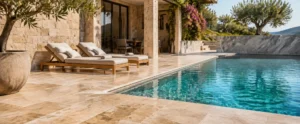
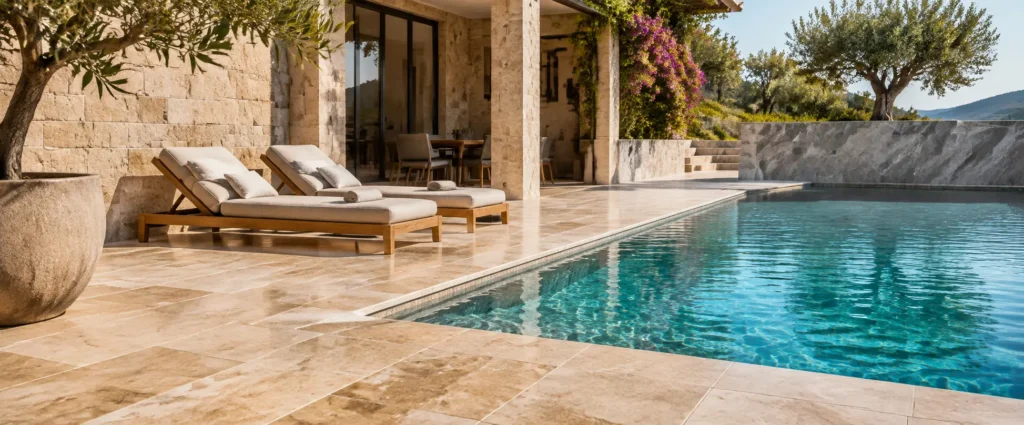
Travertine is one of the most popular natural stones for swimming pool surroundings. Its warm colors, distinctive textures, and natural appearance make it suitable for contemporary, Mediterranean, and traditional architectural designs. Available in beige, ivory, cream, silver, and brown shades, travertine offers considerable flexibility for outdoor landscaping projects.
One of its main advantages is the availability of different surface finishes. Brushed and tumbled travertine can provide a textured surface that is often preferred for pool decks.
Key advantages of travertine include:
Attractive natural colors and patterns.
A wide range of slab, tile, and paving options.
Different surface finishes for architectural applications.
Good design compatibility with outdoor landscapes.
Suitable options for pool decks and surrounding areas.
However, travertine is a porous material, and its performance depends on the selected variety, density, finish, and installation method. Appropriate sealing and regular maintenance may be necessary.
Best applications: Swimming pool decks, outdoor patios, garden pathways, and selected pool coping designs.
Granite: Strength and Durability
Granite is known for its hardness, durability, and resistance to everyday wear. Its dense crystalline structure makes it a practical material for demanding architectural applications.
Available in gray, black, white, green, and other natural colors, granite can complement both modern and traditional swimming pool designs.
For wet environments, textured, flamed, or appropriately brushed finishes are generally preferable to highly polished surfaces.
Key advantages of granite include:
High resistance to abrasion and scratching.
Generally low water absorption.
Excellent durability for outdoor applications.
Wide selection of natural colors and patterns.
Availability in different slab dimensions and finishes.
One important consideration is heat absorption. Dark granite surfaces may become hot under direct sunlight, especially in warmer climates. Therefore, color selection should be based on both architectural preferences and environmental conditions.
Sandstone: A Warm and Natural Appearance
appearance can create a relaxed atmosphere in gardens, outdoor swimming pools, and recreational spaces.
Depending on its mineral composition and density, sandstone can offer different levels of water absorption, strength, and weather resistance.
Key advantages of sandstone include:
Distinctive natural grain and texture.
Warm colors such as beige, brown, red, and yellow.
Natural compatibility with landscape designs.
Availability in different surface textures.
Suitable options for selected outdoor paving applications.
However, not all sandstone varieties perform equally well in wet environments. Some types are more porous and may be vulnerable to staining, moisture absorption, and weathering.Before purchasing sandstone for a swimming pool project, check its technical specifications and suitability for the local climate.
Common Mistakes to Avoid When Choosing Pool Stone
Selecting natural stone based only on its color, appearance, or initial price can create problems after installation. To achieve a durable and safe result, consider the following common mistakes:
Ignoring slip resistance: A polished stone surface may become slippery when exposed to water. Always consider the finish and its tested performance.
Overlooking water absorption: Highly porous materials may require additional protection and maintenance.
Choosing unsuitable stone varieties: Not every travertine, limestone, or sandstone variety is appropriate for swimming pools.
Ignoring chemical compatibility: Certain natural stones can react with acidic cleaners and pool chemicals.
Not considering climate conditions: Temperature changes, frost, sunlight, and salt exposure can affect long-term performance.
Using inappropriate installation materials: Incorrect adhesives, grout, waterproofing, and drainage systems can compromise an otherwise high-quality stone installation.
Not checking actual stone samples: Natural stone varies in color, texture, and veining. Photographs may not accurately represent the entire shipment.
A reliable purchasing decision should always combine visual inspection with technical evaluation and professional installation advice.
Conclusion
Choosing the best natural stone for pools and wet areas requires balancing appearance, safety, durability, and maintenance requirements.Travertine is a popular option for pool decks and outdoor surroundings, granite offers excellent durability, limestone provides an elegant natural appearance, sandstone introduces warm earthy textures, and marble creates sophisticated architectural designs.
However, the best material ultimately depends on the specific application, environmental conditions, and technical characteristics of the selected stone.Before purchasing, compare technical specifications, inspect actual stone samples, and consult experienced suppliers to ensure that the material meets your project’s requirements.
Looking for high-quality natural stone for your swimming pool or architectural project?
MOT Stone supplies Iranian natural stone, including travertine, granite, limestone, and marble, in slabs, tiles, and blocks for international buyers. With access to stone-producing regions, custom processing options, quality inspection, and international shipping coordination, MOT Stone helps importers, distributors, architects, and contractors source materials according to their project requirements.
Contact the MOT Stone team to explore available stone varieties, request samples, review slab photographs, and receive a quotation for your next project.
Frequently Asked Questions Best Natural Stone for Pools
What Is the Best Natural Stone for Swimming Pool Decks?
Travertine is a popular choice for swimming pool decks because of its natural appearance, warm color range, and availability in different textured finishes. Granite and selected limestone varieties are also suitable options, depending on their technical characteristics and environmental conditions.
Is Travertine Safe for Wet Areas?
Yes, properly selected travertine can be used in wet areas, including swimming pool surroundings and selected bathroom applications. However, its water absorption, surface texture, and maintenance requirements should be evaluated before installation.
Is Marble Suitable for Swimming Pools?
Selected marble varieties can be used around swimming pools, particularly in luxury architectural projects. However, marble can be sensitive to acidic substances and certain pool chemicals. Choosing an appropriate finish and following suitable maintenance practices are essential.
Which Natural Stone Is Least Slippery When Wet?
There is no single natural stone that is always the least slippery. Slip resistance depends on the stone variety, surface finish, installation, and maintenance. Textured finishes such as flamed, brushed, and appropriately tumbled surfaces may provide better traction than polished surfaces.
Does Natural Stone Around Pools Need Sealing?
Some natural stones, particularly porous varieties such as travertine and limestone, may benefit from sealing. The need for sealing depends on the stone’s porosity, water absorption, and intended application. A suitable sealer can reduce moisture and stain absorption but does not replace proper waterproofing.