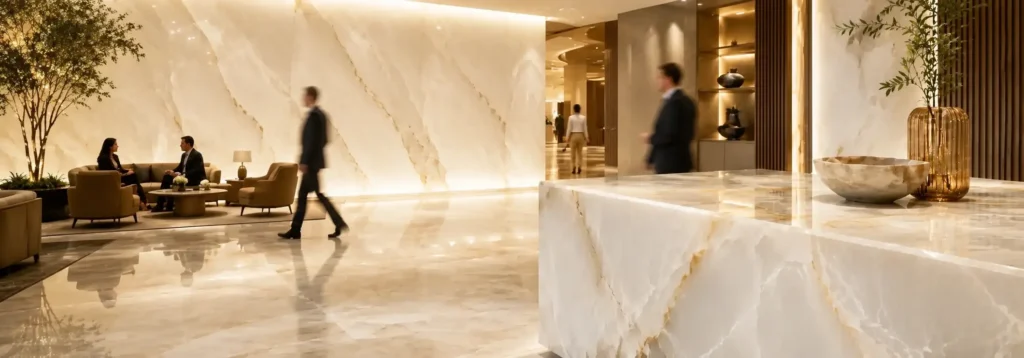
White onyx is one of the most visually striking natural stones used in luxury interior design. Its translucent appearance, unique veining, and elegant color variations make it a popular choice for feature walls, backlit panels, countertops, and decorative elements. However, unlike many more durable stones, white onyx requires careful planning and proper application to maintain its beauty over time.
Common mistakes in slab selection, lighting design, installation, and maintenance can reduce the performance and visual impact of this delicate stone. In this guide, we will explore the most important mistakes to avoid when using white onyx and explain how to achieve better results in interior projects.
Common Mistakes When Using White Onyx in High-Traffic Areas
One of the most common mistakes when using white onyx is selecting it for applications that do not match its natural characteristics. Although white onyx is admired for its translucent appearance, unique veining, and luxurious visual impact, it is a relatively delicate and porous natural stone that requires careful planning and proper placement.
White onyx is not the ideal choice for surfaces exposed to heavy wear, frequent impact, or constant contact with harsh substances. For example, heavily used flooring, busy commercial surfaces, and areas with high mechanical stress may increase the risk of scratches, stains, or surface damage over time.
Kitchen countertops require special consideration as well. While white onyx can be used in luxury kitchen designs, it requires proper sealing, regular maintenance, and careful handling because acidic liquids, oils, and abrasive materials can affect its appearance. For high-use kitchen areas, other more durable stones may be more practical.
White onyx performs best in decorative and low-contact applications where its natural beauty can be fully appreciated. Popular uses include backlit feature walls, reception desks, bathroom vanities, decorative panels, and luxury interior accents. Choosing the right application helps preserve the elegance of white onyx while ensuring better long-term performance.
1.Selecting the Wrong Slab Thickness for White Onyx
Choosing the appropriate thickness is an important step when working with white onyx. One common mistake is selecting a slab thickness without considering the final application, installation method, or structural requirements of the project.
Although thinner white onyx slabs can be suitable for decorative applications such as wall panels and backlit features, they may require proper support and careful installation to reduce the risk of cracking or damage. Larger surfaces or areas exposed to additional stress may require stronger support systems and a thickness that matches the project conditions.
The ideal thickness depends on several factors, including the size of the slab, installation location, level of use, and the type of backing or support structure. A properly selected slab thickness helps improve stability while preserving the natural beauty and translucency of white onyx.
Working with an experienced stone professional and installer ensures that the selected white onyx slab is suitable for the intended application and performs well over time.
read more: Natural Onyx Stone Buying Guide
2. Ignoring White Onyx Veining and Slab Selection
One of the most important factors when choosing white onyx is understanding the natural variation of each slab. Unlike manufactured materials, every piece of onyx has its own unique veining, color movement, and level of translucency. Ignoring these characteristics can result in a final installation that does not achieve the intended visual effect.
Before cutting and installing white onyx, the slab should be carefully inspected for vein direction, color balance, natural fissures, and overall pattern continuity. This is especially important for large feature walls, bookmatched panels, and backlit applications where the stone’s natural movement becomes a major part of the design.
Selecting slabs based only on color without considering their full pattern can create an inconsistent appearance after installation. Careful slab selection and proper matching help highlight the natural beauty of white onyx and create a more balanced and refined interior design result.
3.Lack of Proper Substrate Installation
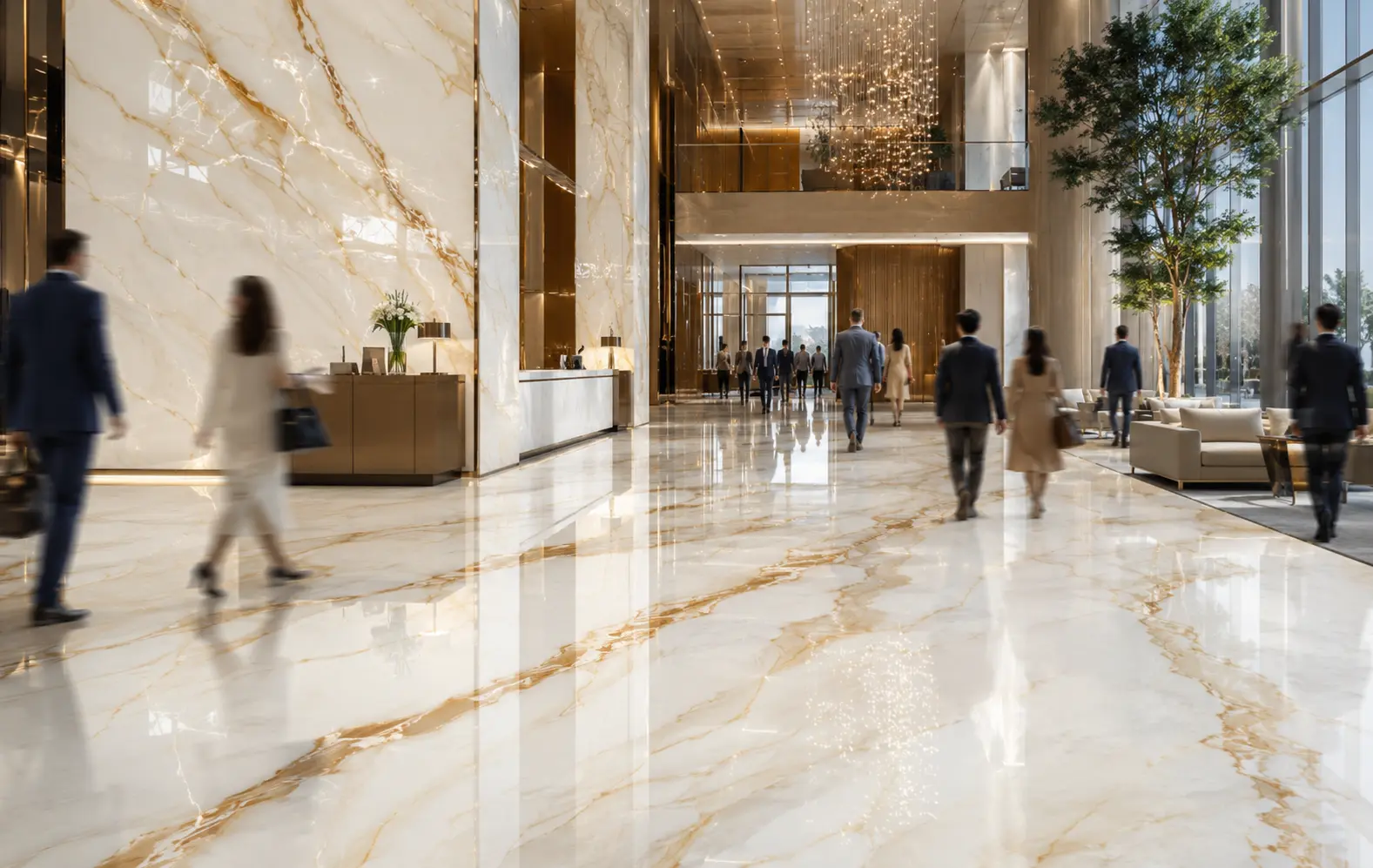
Another common mistake when using white onyx is ignoring the importance of proper substrate installation. Since white onyx is a delicate natural stone, the surface beneath it must be perfectly flat, level, stable, and made from durable materials. If the substrate is uneven or weak, it can cause cracking, breakage, movement, or poor adhesion over time.
The substrate should also be strong enough to support the weight of the onyx slab and any additional pressure placed on it. This is especially important for wall cladding, countertops, reception desks, and decorative panels. Working with an experienced onyx stone supplier and a professional installer helps ensure that white onyx is installed on the right base for better stability, safety, and long-term performance.
4.Ignoring Lighting Design When Using White Onyx
Selecting the right surface finish is an important part of achieving the desired appearance and performance of white onyx. A common mistake is choosing a finish based only on visual preference without considering the location, maintenance requirements, and level of use.
A polished finish enhances the natural shine, translucency, and veining of white onyx, making it a popular choice for decorative applications where visual impact is the main priority. However, its glossy surface can make fingerprints, scratches, and surface marks more noticeable, especially in areas with frequent contact.
Honed or matte finishes create a softer and more natural appearance, but they may require careful maintenance depending on the application. These finishes can show dirt or staining more easily in certain environments if the stone is not properly protected and maintained.
The best finish depends on the purpose of the project, the expected level of use, and the desired design effect. Considering these factors before fabrication helps ensure that white onyx maintains both its beauty and long-term performance.
read more: What Is White Onyx?
5.Using Ineffective Lighting Systems for White Onyx
White onyx is often selected for projects where lighting plays an important role in highlighting its natural depth and patterns. However, using an unsuitable lighting system can reduce the visual impact of the stone and prevent it from showing its full potential.
A common issue is relying on poorly distributed lighting that creates uneven brightness, visible hotspots, or areas with insufficient illumination. In backlit applications, the position of LED sources, diffusion materials, and light intensity should be carefully planned to achieve a smooth and balanced appearance.
Dynamic lighting can be a valuable design feature in selected luxury interiors, allowing different moods and visual effects to be created. However, it should complement a well-designed lighting system rather than replace proper planning and installation.
6.Incorrect Surface Finish for White Onyx Applications
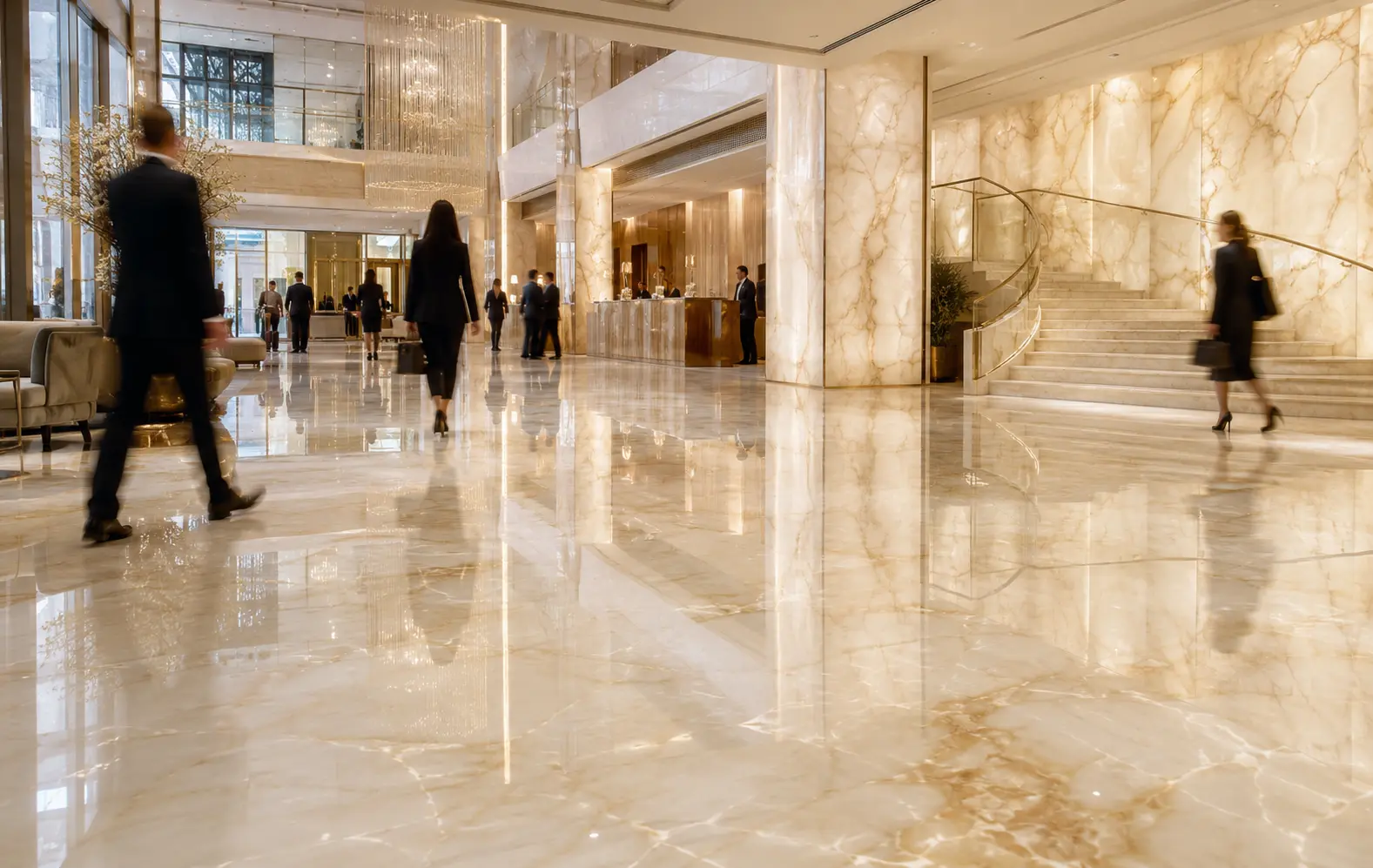
Another common mistake when using white onyx is choosing the wrong surface finish for the intended application. The surface finish plays an important role in both the appearance and performance of the stone. For example, a polished finish can highlight the natural shine, translucency, and veining of white onyx, while a honed finish may create a softer and more subtle look.
However, selecting an unsuitable finish can reduce the durability and visual appeal of the stone. In areas exposed to moisture, stains, or frequent contact, the wrong finish may make white onyx more vulnerable to etching, staining, dullness, and surface damage. A professional onyx stone supplier can help buyers choose the most suitable finish based on the project type, whether the stone is used for wall cladding, countertops, backlit panels, reception desks, or luxury interior features.
7.Polished Finish and Susceptibility to Stains
A polished finish can make white onyx look more luxurious by enhancing its shine, translucency, and natural veining. However, one common mistake is choosing a polished surface for areas that are frequently exposed to water, oil, food, or daily contact. Although polished white onyx looks elegant, scratches, etching marks, fingerprints, and stains can become more visible on its glossy surface over time.
For this reason, polished white onyx is usually better suited for decorative applications such as feature walls, backlit panels, reception desks, and luxury interior accents rather than heavy-use surfaces. If a polished finish is selected, proper sealing, protective treatments, and regular cleaning are essential. A professional onyx stone supplier can help buyers choose the right finish based on the project’s design, usage level, and maintenance requirements.
8.Matte Finish
Another common mistake when using white onyx is choosing a matte finish for surfaces exposed to heavy use or frequent contact. Although a matte finish can create a modern, soft, and elegant appearance, it may show stains, dirt, scratches, and wear more easily over time, especially in high-traffic areas. This can reduce the visual appeal of white onyx and make the surface look dull or aged sooner than expected.
For this reason, matte white onyx is usually better suited for decorative walls, low-contact surfaces, bathroom accents, and luxury interior features rather than busy floors or heavily used countertops. A professional onyx stone supplier can help buyers compare matte, polished, and honed finishes and choose the best option based on the project’s design style, traffic level, and maintenance needs.
9.Ignoring the Degree of Polish
Another common mistake when using white onyx is ignoring the proper degree of polish. The level of polishing can directly affect both the appearance and maintenance of the stone. Over-polishing may make white onyx look too glossy or artificial, reducing the visibility of its natural texture and soft beauty. On the other hand, under-polishing can leave the surface uneven, rough, and more difficult to clean.
Choosing the right polish level helps preserve the natural elegance, veining, and durability of white onyx. This is especially important for applications such as wall cladding, reception desks, backlit panels, bathroom vanities, and luxury interior features. A professional onyx stone supplier can guide buyers in selecting the most suitable polish level based on the design style, usage area, and maintenance expectations.
Conclusion
Successful use of white onyx in interior projects requires awareness of common mistakes. Understanding and preventing mistakes using white onyx, such as incorrect finish selection, inadequate substrate, lack of attention to lighting, and improper maintenance, can reduce the beauty and durability of this stone over time.
By avoiding these errors, choosing an experienced contractor, and strictly adhering to maintenance principles, you can protect your investment and create a lasting and beautiful space that benefits from the beauty and splendor of white onyx.
FAQ About White Onyx Mistakes
1. What is the most common mistake when using white onyx?
The most common mistake is using white onyx in high-traffic areas without proper sealing, support, and maintenance.
2. Is white onyx suitable for kitchen countertops?
White onyx can be used for countertops, but it is better for low-traffic luxury areas because it is porous and delicate.
3. Why is lighting important for white onyx?
Lighting is important because white onyx is translucent, and proper backlighting can highlight its natural veins and depth.
4. How can I avoid damage to white onyx?
Use proper sealing, neutral cleaners, careful installation, and avoid acidic liquids, heavy impact, and abrasive cleaning tools.