In modern architecture and interior design, selecting the right material is essential for achieving beauty, durability, and long-term value. White travertine has become one of the most preferred natural stones among architects, designers, and property owners due to its luxurious appearance, neutral color palette, and ability to complement both modern and classical styles.
The applications of white travertine go beyond aesthetics. From elegant facades and flooring to interior walls, staircases, bathrooms, and landscaping elements, this natural stone offers versatility, durability, and timeless appeal. Understanding the key white travertine applications, along with its benefits and design potential, can help architects, investors, and homeowners make smarter decisions for both residential and commercial projects.
In this article, we explore the most important applications of white travertine in architecture and interior design, and explain why it remains one of the most valuable choices in contemporary construction.
What is White Travertine?
White travertine is a type of sedimentary limestone formed by the mineral deposits from hot springs. Features such as a porous structure, natural texture, and a light color range from white to cream make this stone an ideal option for luxury projects.
Other prominent characteristics of this valuable stone include sufficient strength, high cuttability, and excellent adhesion to mortar.
White Travertine Interior Applications
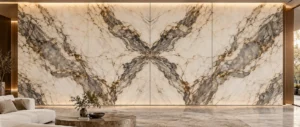
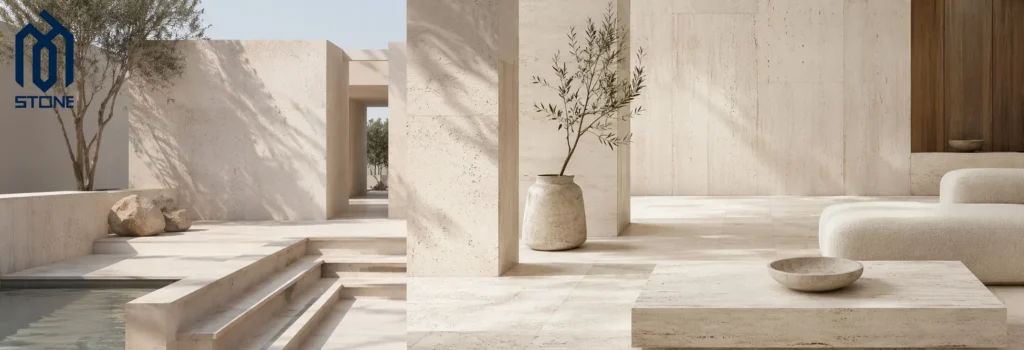
White travertine is one of the most elegant and practical natural stones used in interior design. Thanks to its bright color, soft texture, and high light reflection, it can make interior spaces feel cleaner, brighter, more spacious, and more relaxing. This is why white travertine interior applications are especially popular in luxury homes, modern apartments, hotels, office buildings, and high-end commercial projects.
Architects and interior designers often choose white travertine for minimalist, classical, and neoclassical spaces because of its timeless appearance and design flexibility. Its neutral color palette allows it to pair beautifully with wood, glass, metal, concrete, and matte finishes. As a result, white travertine can be used in a wide range of interior spaces, from floors and walls to bathrooms, staircases, fireplaces, and decorative elements.
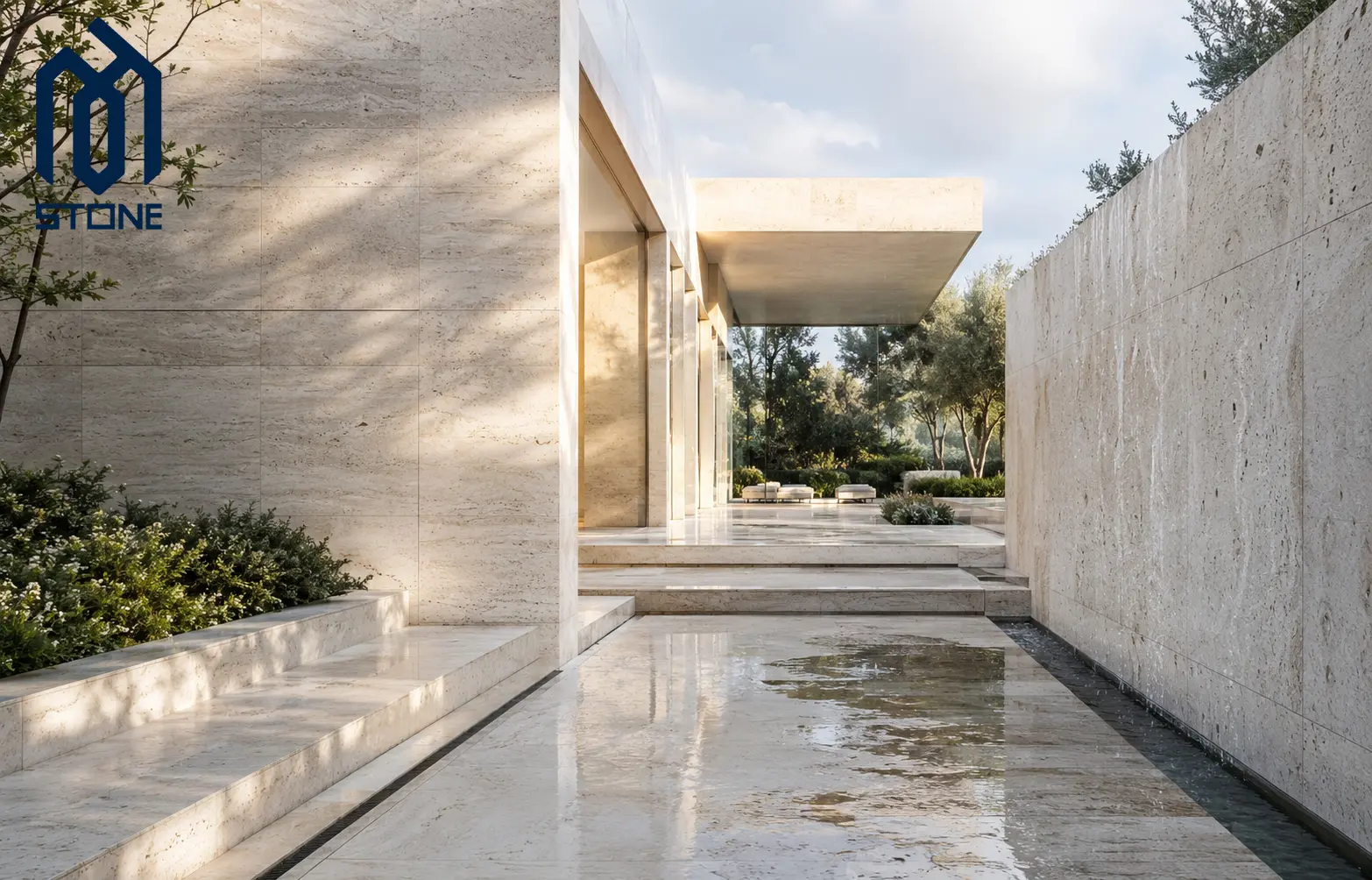
Why Use White Travertine in Interior Design?
White travertine is widely selected for interior projects because of its bright appearance, natural texture, and ability to create timeless spaces. Its neutral color palette allows architects and designers to combine it with different materials and design styles, from modern minimalist interiors to luxury hospitality environments.
| Why White Travertine Works Well | Why White Travertine Works Well | Suitable Projects | Application |
|---|---|---|---|
| Select the right finish and thickness based on climate and exposure | Creates a bright, timeless facade with natural texture and architectural character | Villas, residential buildings, commercial projects | Exterior Facades |
| Consider slab selection, color consistency, and design concept | Adds warmth, elegance, and a natural atmosphere to premium interiors | Luxury residences, hotels, lobbies, feature walls | Interior Design |
| Traffic level and surface finish should match the application | Provides a sophisticated natural surface that works with different design styles | Hotels, public spaces, luxury homes | Flooring |
| Proper sealing and maintenance are important | Creates a calm and high-end environment with a natural stone appearance | Luxury bathrooms, spas, vanity areas | Bathrooms & Wet Areas |
| Slip resistance and suitable outdoor finishes should be considered | Connects architectural spaces with natural surroundings and provides a timeless look | Patios, terraces, pool areas, landscaping projects | Outdoor Applications |
Unlike uniform manufactured materials, each white travertine slab has natural variations in texture and pattern, giving interior spaces a unique character.
Key advantages of white travertine in interior projects include:
- Bright and elegant appearance
- Natural texture with unique surface character
- Compatibility with modern and classic design styles
- Suitable for luxury residential, hospitality, and commercial interiors
White Travertine Finishes and Surface Selection
The finish of white travertine plays an important role in both appearance and performance. Different finishes can change how the stone interacts with light, texture, and daily use.
Common finishes include:
- Polished finish: Creates a refined and more reflective appearance, suitable for decorative and luxury interior applications.
- Honed finish: Provides a softer, matte appearance with a more natural feel.
- Brushed or textured finishes: Add surface character and are often considered for applications where a more natural texture is preferred.
Choosing the right finish depends on the project type, location, expected usage, and desired design outcome.
White Travertine in Luxury Hospitality and Residential Projects
White travertine is frequently specified in hospitality and high-end residential projects where designers aim to create a calm, sophisticated, and natural atmosphere.Its neutral tones allow it to work well with materials such as wood, metal, glass, and other natural stones, making it suitable for coordinated interior concepts.
Common project types include:
- Luxury hotels and resorts
- High-end residential developments
- Private villas
- Premium commercial interiors
read more: what is white travertine?
Choosing White Travertine for Your Project
Selecting white travertine requires considering more than appearance alone. Architects, designers, and contractors should evaluate:
- Project location and application type
- Interior or exterior requirements
- Suitable surface finish
- Expected traffic level
- Maintenance expectations
- Slab selection and color consistency
A proper selection process helps ensure that the stone meets both aesthetic goals and long-term project requirements.
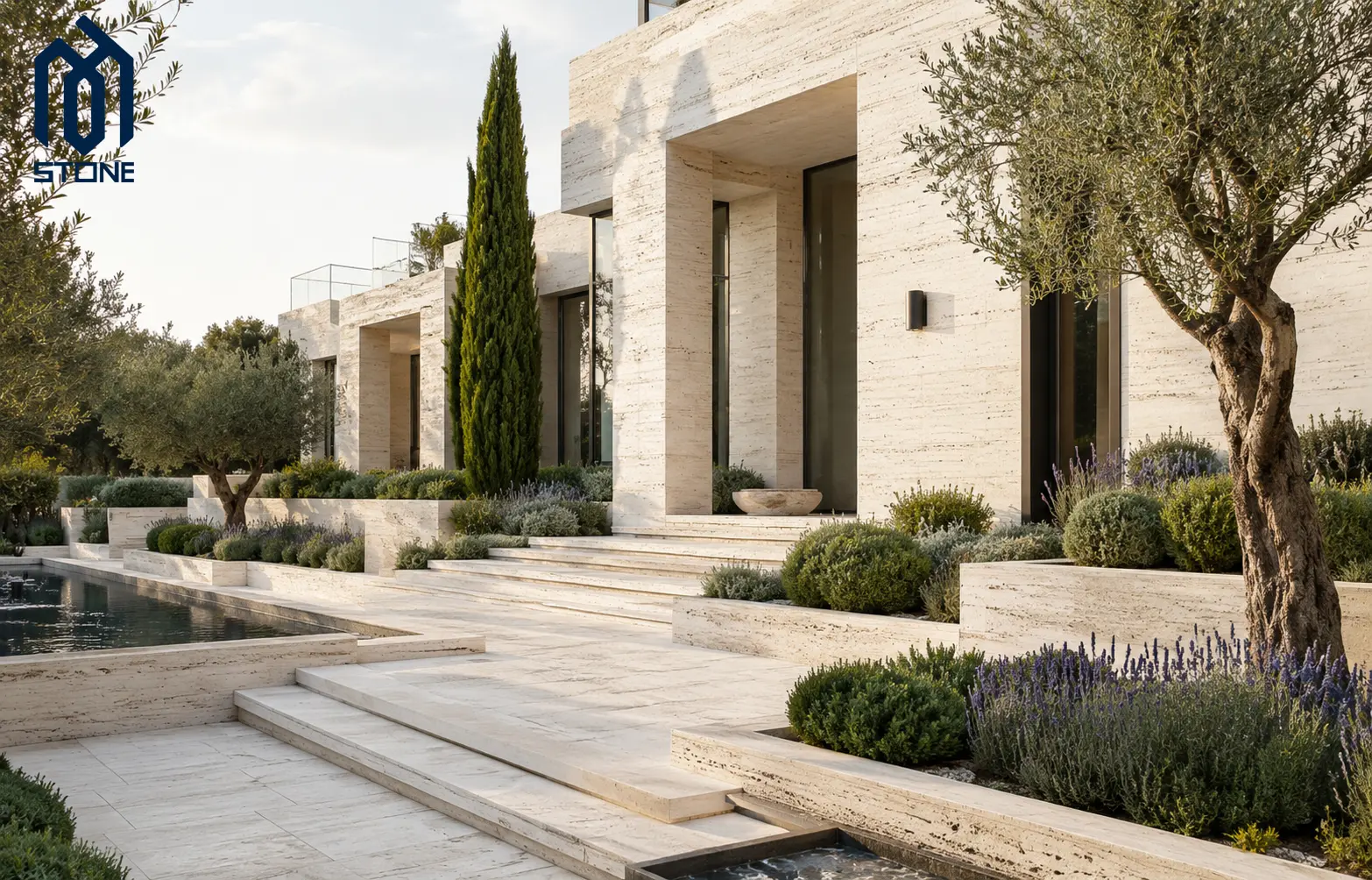
Climate Compatibility and Performance of White Travertine
One of the main concerns of builders is the optimal performance of materials in different climatic conditions. White travertine for exterior use, with its porous structure and adequate resistance to temperature changes, performs well in many regions of Iran.
Its lower heat absorption compared to dark stones makes it suitable for warm areas. When installed properly, this stone also shows acceptable durability against frost, making it a reliable choice for long-term projects.
Performance in Hot and Dry Climates
In hot and dry cities, selecting a stone with low heat absorption is very important. The light color of white travertine for exterior use reflects a significant portion of sunlight, preventing excessive surface temperature increases.
This feature is very useful for façades and courtyard flooring. Its adequate resistance to direct sunlight minimizes color fading and quality loss.
Performance in Cold Climates
In cold regions, building stones must resist frost and expansion-contraction cycles. White travertine for exterior use, when properly processed and installed, performs well against freeze-thaw cycles. Using appropriate stone thickness and standard mortar increases its durability.
read more: What is Travertine?
Long-Term Durability and Maintenance
From an economic perspective, the durability and maintenance cost of building stones are very important. White travertine, with proper care, maintains its initial beauty for many years.
Periodic cleaning and protective coatings increase its surface resistance. Compared to many synthetic materials, this stone has higher long-term investment value and helps maintain the project’s aesthetic quality.
Conclusion
By carefully reviewing the White Travertine Applications, it is clear that this stone goes beyond an aesthetic choice and plays a key role in increasing both the technical and economic value of a project.
From white travertine flooring in interior spaces to white travertine for exterior use, this material meets the diverse needs of professional architects and builders. If your goal is to create a lasting, luxurious, and reliable space, investing in white travertine is a smart decision.
Frequently Asked Questions About White Travertine
1. What is white travertine used for?
White travertine is commonly used for exterior facades, interior flooring, wall cladding, bathrooms, hospitality projects, and luxury residential applications.
2. Is white travertine suitable for exterior applications?
Yes. White travertine is widely used for facades, terraces, patios, and landscaping projects when the appropriate finish and installation method are selected.
3. Is white travertine a good choice for interior design projects?
Yes. Its light color, natural texture, and timeless appearance make white travertine a popular choice for luxury interiors, hotels, and residential projects.
4. What finish is best for white travertine?
The best finish depends on the application. Honed finishes are commonly used for natural interior looks, while textured finishes are preferred for some outdoor applications.