Natural stone finishes have a major impact on the final appearance, feel, and performance of stone surfaces. The type of finish not only changes how the stone looks but also affects its texture, maintenance needs, durability, and suitability for different architectural applications.
In this guide, we will explore the most common types of natural stone finishes, including polished, honed, leathered, brushed, flamed, bush hammered, sandblasted, and tumbled finishes.
These surface treatments are used across different natural stones, from marble and granite to premium materials such as wholesale onyx slabs, where the right finish can highlight the unique patterns and characteristics of the stone.
By understanding the differences between each finish, architects, designers, contractors, and stone buyers can make a more informed choice for residential, commercial, and large-scale projects.
Polished Stone Finish
Appearance, Advantages, & More
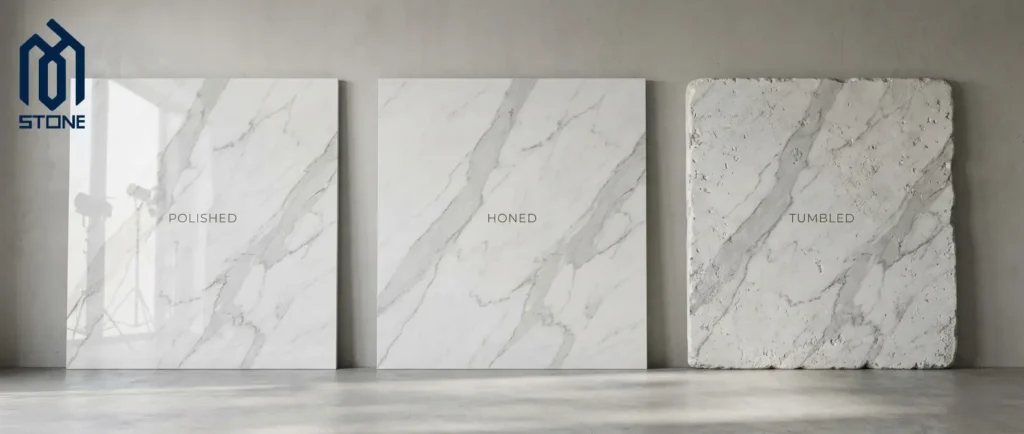
Among the various natural stone finishes available today, a polished finish is arguably the most popular treatment, resulting in a perfectly smooth and glossy surface.This process involves using progressively finer abrasive tools to grind the stone until it reaches a high degree of smoothness and reflectivity.
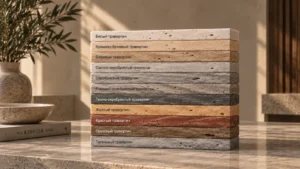
Types of Natural Stone Finishes
| Example from MOTstone Products | Main Characteristics | Description | Stone Finish |
|---|---|---|---|
| Picasso Green Granite – polished slabs highlight its deep green tones and natural patterns. | Glossy, highlights colors, easy maintenance | A glossy finish created by grinding and polishing the stone surface until it becomes smooth and reflective. | Polished Finish |
| Pietra Gray Marble – honed finish creates a refined matte surface while preserving the stone texture. | Soft look, less slippery, natural feel | A smooth matte finish created by stopping the polishing process before the stone becomes reflective. | Honed Finish |
| Delicatus Granite – leathered finish enhances its natural movement and mineral details. | Durable, hides marks, premium texture | A textured finish that adds a subtle natural feel while keeping the stone’s original color depth. | Leathered Finish |
| Travertine materials such as Silver Travertine can be processed with brushed finishes for architectural projects. | Natural texture, rustic appearance | A lightly textured surface created by brushing the stone with abrasive tools. | Brushed Finish |
| Iranian Granite varieties such as King Green Granite can be supplied with textured finishes for exterior projects. | Slip-resistant, durable, outdoor suitable | A textured surface produced by applying high heat to the stone surface. | Flamed Finish |
| Granite products from MOTstone can be customized with bush hammered surfaces based on project needs. | High grip, strong texture, outdoor use | A rough textured finish created by striking the stone surface with a bush hammer tool. | Bush Hammered Finish |
| Iranian Limestone and Granite products can be supplied with sandblasted finishes. | Non-slip, uniform texture | A matte textured surface created by blasting abrasive particles onto the stone. | Sandblasted Finish |
| Travertine tiles from MOTstone are suitable options for tumbled finishes. | Antique look, decorative, traditional style | A naturally aged finish created by tumbling stone pieces with abrasive materials. | Tumbled Finish |
is finish enhances light reflection, making the stone appear more vibrant. Key advantages include its eye-catching beauty, ease of cleaning, and ability to highlight the stone’s intricate veining. It is ideal for flooring, wall cladding, and reception desks.
Stones Suitable for Polished Finishes
When selecting natural stone finishes, polishing works exceptionally well on hard stones such as granite and marble. Granite is an excellent choice due to its high durability and beautiful grain, while marble, with its fine texture and diverse colors, lends a luxurious, striking appearance to any space.Limestone can also be polished to great effect, though it requires more meticulous care. Selecting the right stone is crucial to achieving the desired outcome.
The Polishing Process
The process includes initial stone cutting, grinding with coarse abrasive discs, further refining with finer discs, and finally, buffing with specialized powders. Each step requires precision and expertise to ensure a uniform surface.The use of advanced machinery and high-quality materials plays a vital role in the final quality of the polish.
Maintenance and Care
Because of their glossy surface, polished stones are susceptible to scratches and stains. It is recommended to use mild cleaning agents and avoid acidic substances.Placing pads under furniture and using rugs can prevent surface scratches. Regular, periodic cleaning with specialized products will help maintain the stone’s luster.
Cost and Time
The cost and time required depend on various factors such as the type of stone, project scale, and design complexity. Generally, a polished finish is more time-consuming and costly than other types.However, the luxurious appearance and durability provided by this finish make it a worthwhile investment. Before starting, it is advisable to obtain quotes from several contractors to compare and select the best option.
Honed Stone Finish: When to Use It in Interior and Exterior Projects
A honed finish, a type of natural stone finishes, creates a non-reflective, matte surface that gives the stone a more natural and calming appearance. This process uses medium-grit abrasive tools to finish the surface, resulting in reduced sheen.This finish offers superior resistance to stains and scratches, making it an ideal choice for high-traffic areas. Honed finishes are also frequently used in outdoor spaces, such as patio flooring and walkways.
Honed vs. Other Finishes
Compared to a polished finish, the honed method creates a matte, non-reflective surface. It produces less light glare, giving the stone a more organic look. Compared to rough, Tumbled finishes, a honed surface is smoother and more uniform.The choice of finish ultimately depends on personal preference and the specific application. These distinctions offer a wide range of possibilities for natural stone projects.
Versatile Applications of Honed Finishes
A honed finish is highly suitable for flooring, walls, tables, and countertops. Its resistance to stains and scratches makes it perfect for high-traffic areas like kitchens and bathrooms. Furthermore, a honed finish can help cultivate a peaceful and intimate atmosphere.
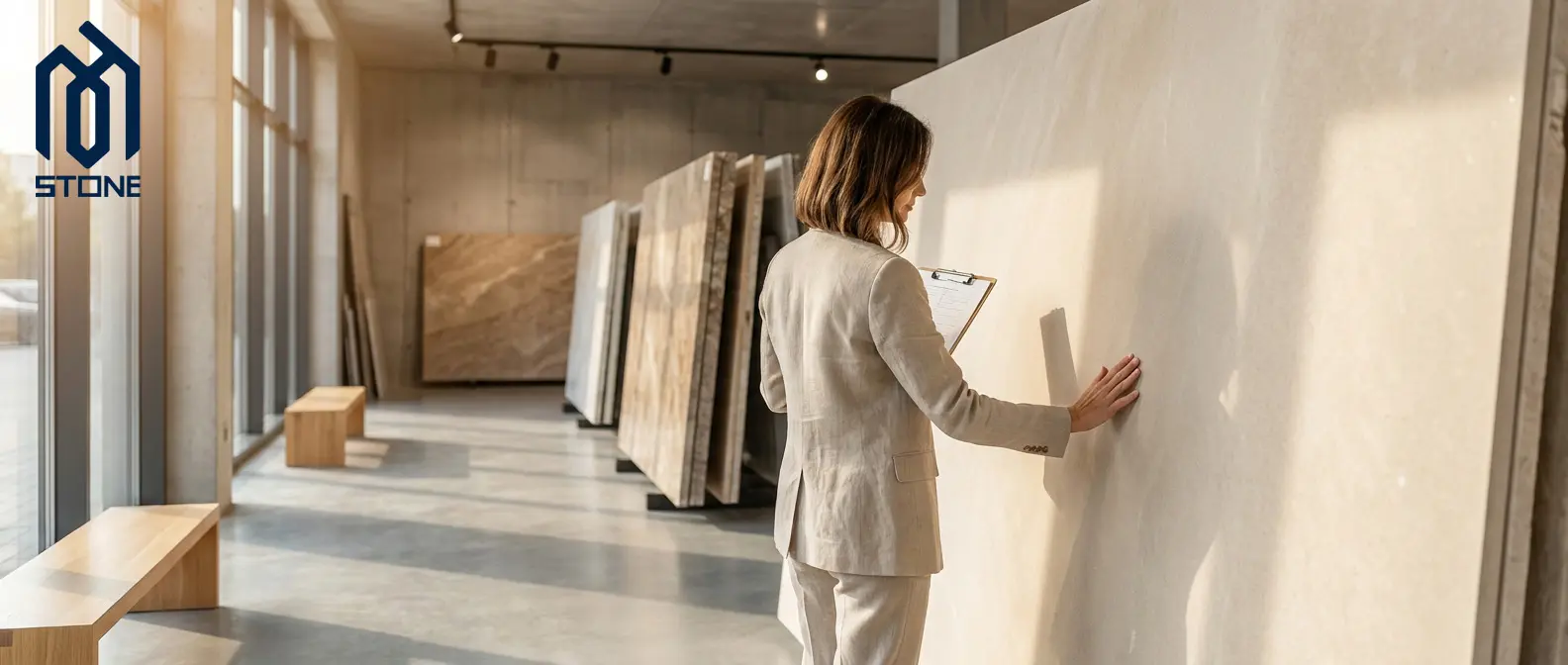
Key Considerations for Selecting Stone for Honed Finishes
Stones with uniform textures and darker colors are well-suited for a honed finish. Stones with heavy veining might appear uneven after this process.Additionally, one must consider the stone’s resistance to corrosion and staining. Durable stones like granite and high-quality limestone are excellent candidates for a honed finish.
Tumbled Stone Finish: Characteristics and Ideal Applications
Tumbled Stone Finish is a method that can impart a rustic and natural appearance to stone by creating a rough and uneven surface. This technique processes stone surfaces using coarse abrasive tools, resulting in a Tumbled and irregular finish.Tumbled Stone Finish generates increased friction, making it a suitable method for areas requiring enhanced safety, such as pool decks and staircases.
Stone cladding finishes convey a sense of warmth and intimacy to the space. This type of finish is applicable in both modern and traditional designs and can bestow a unique aesthetic upon a project.
Types of Stone Cladding Finishes
Tumbled Stone Finish is executed in various types, including hammered finish, bush-hammered finish, and scraper finish. Each of these finishes creates a surface with a distinct texture and unevenness.
A hammered finish results in a rough and uneven surface. A bush-hammered finish produces a surface with small pitting. Additionally, a scraper finish creates a surface with parallel lines. The selection of the appropriate finish type depends on personal preference and the project’s design style.
Specific Applications of Stone Cladding Finish
Tumbled Stone Finish is highly suitable for pool decks, staircases, walkways, and outdoor areas. Due to its high friction, this type of finish reduces the risk of slipping.Furthermore, Tumbled Stone Finish can contribute to creating a natural and rustic ambiance.This finish is utilized in modern and traditional designs and can impart a unique character to your project.
Durability and Resistance of Stone Cladding Finish
Thanks to its rough and uneven surface, Tumbled Stone Finish exhibits high resistance to corrosion and slippage. This type of finish can effectively withstand various weather conditions, making it appropriate for exterior spaces.
However, Tumbled Stone Finish may require more frequent cleaning, as dust particles can easily accumulate on its surface. Stone surface finishes are a suitable option for high-traffic areas exposed to diverse weather conditions.
Design Considerations When Using Stone Cladding Finish
When employing stone cladding finish, attention should be paid to the design style and the stone’s color. Tumbled Stone Finish typically harmonizes better with darker stones and natural colors. Additionally, the dimensions of the stone and the type of project should be taken into account. Tumbled Stone Finish might not be suitable for small, modern spaces.
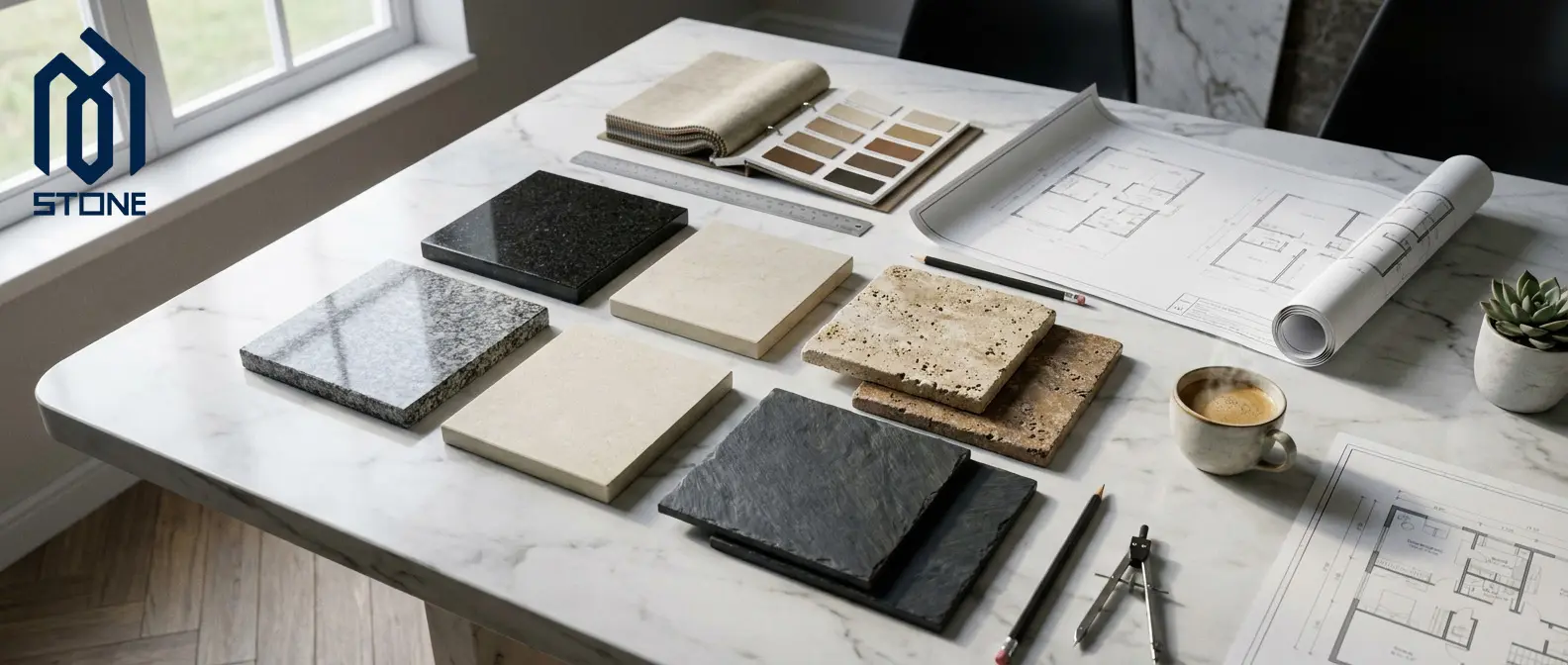
How to Choose the Best Natural Stone Finish for Your Project?
Choosing the right type of natural stone finish requires considering various factors. These include the type of building stone and its durability, the decoration style, the amount of foot traffic in the area, the budget, and stone maintenance considerations.Polished, matte, and bush-hammered finishes each have their own advantages and disadvantages and are suitable for different applications.
Evaluating the Decoration Style
The decoration style plays a significant role in selecting the appropriate texture. When considering polished vs honed stone, one should look at the overall aesthetic: for modern and minimalist spaces, a polished finish with its glossy appearance is often an excellent choice.
Conversely, for rustic and traditional styles, a matte or honed finish with its natural look can create a more charming, authentic effect.In classic interiors, a polished finish that highlights the stone’s veining enhances the beauty of the space. Ultimately, your choice should match the overall design style.
Considering the Budget
The cost of stone surface finishes can significantly impact a project’s budget. A polished finish is typically more expensive than matte and bush-hammered finishes, as it requires specialized equipment and more expert labor.
Furthermore, the maintenance and repair costs for polished stones are also higher. Before choosing a finish type, you should carefully review your budget and select an option that aligns with your financial plan.
Consulting with Experts
Selecting the appropriate finish type requires sufficient knowledge and experience. Consulting with experts in building stone and interior design can assist you in choosing the best option.Experts can provide valuable guidance by assessing the stone type, decoration style, and your specific needs. They can also offer detailed information regarding the installation, maintenance, and repair of stones. Natural stone finishes demand adequate expertise and experience.
Assessing Foot Traffic
The amount of foot traffic in an area also influences the choice of stone finish. For areas with heavy foot traffic, such as hallway floors and kitchens, a matte or bush-hammered finish, which offers greater resistance to stains and scratches, is a more suitable selection.
For areas with low foot traffic, like wall claddings and reception tables, a polished finish can create a more elegant appearance. Polished, matte, or bush-hammered stones are each appropriate for spaces with varying levels of foot traffic.
Conclusion
In this article, we explored the different types of natural stone finishes – polished, matte, and bush-hammered – and aimed to help you understand their features and applications.Each of these finishes possesses its unique beauty and strength and is suited for different uses.
By considering your needs, preferences, and budget, you can select the best option for your project and benefit from the beauty and durability of the stone surface finish.The right choice not only enhances the aesthetic appeal of a space but also contributes to its longevity and durability.
Frequently Asked Questions About Stone Finish
What is the most popular finish for natural stone?
Polished finish is one of the most popular choices for natural stone because it enhances colors and patterns while creating a glossy surface.
What is the difference between polished and honed stone?
Polished stone has a glossy reflective surface, while honed stone has a matte finish with lower reflection and a more natural appearance.
Which stone finish is best for outdoor projects?
Flamed and textured finishes are commonly selected for outdoor projects because they provide better slip resistance.