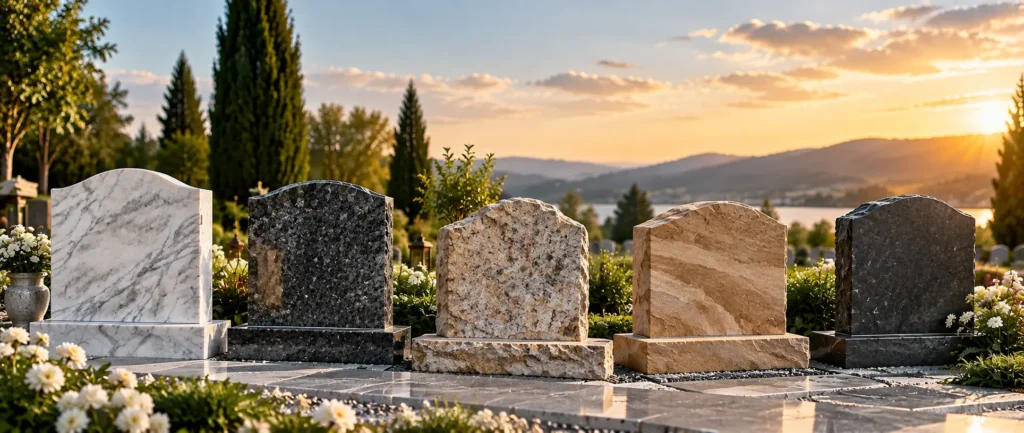
What makes one headstone last for generations while another loses its appearance and engraved details over time?
The answer largely depends on the stone’s physical properties, environmental resistance, and processing quality. Choosing the right headstone materials is essential for creating memorials that maintain their structural integrity, appearance, and legibility despite years of exposure to outdoor conditions.
Granite and marble are among the most widely recognized natural stones used for headstones, but they offer different advantages. Granite is often preferred for its durability, low water absorption, and suitability for detailed engraving, while marble is valued for its classic appearance and carving possibilities. The best choice depends on the climate, intended design, surface finish, and maintenance expectations.
For headstone manufacturers, stone importers, and distributors, material selection also involves evaluating color consistency, block and slab quality, processing requirements, and supply availability. These factors directly influence production efficiency and the quality of the finished memorial.
In this guide, we compare the best natural headstone materials, explain the key factors that influence durability and appearance, and explore how MOT Stone can support international buyers in sourcing Iranian granite and marble stone for headstone manufacturing.
What Makes a Natural Stone Suitable for Headstones?
The best headstone materials must withstand long-term outdoor exposure while preserving their appearance, structural integrity, and engraved details. Since headstones remain exposed to sunlight, rain, temperature changes, and environmental pollutants, choosing a suitable natural stone requires evaluating more than its color or visual appeal.
For headstone manufacturers, importers, and distributors, the following characteristics are particularly important:
Durability and Weather Resistance
A suitable headstone material should resist weathering, surface deterioration, and damage caused by changing environmental conditions. Freeze-thaw cycles, moisture, and atmospheric pollutants can affect natural stones differently depending on their mineral composition and physical properties.
Long-term durability is especially important for memorials installed in regions with harsh climates.
Water Absorption and Porosity
Water absorption influences how natural stone responds to moisture exposure. Stones with higher absorption may be more susceptible to staining, moisture-related deterioration, and freeze-thaw damage under certain conditions.
Evaluating water absorption alongside other technical properties helps manufacturers select materials suitable for the intended installation environment.
Engraving Quality and Surface Finish
The stone should support clear, durable inscriptions and decorative details. Grain structure, surface uniformity, and finishing quality can influence the precision and appearance of engraved text.Polished surfaces are commonly used for headstones, particularly when strong color contrast and a refined appearance are desired. However, the appropriate finish depends on the material and engraving technique.
Structural Integrity and Processing Quality
Natural fractures, weak areas, and processing defects can affect the durability and appearance of a finished headstone.For manufacturers sourcing blocks or slabs, inspecting material quality before cutting and finishing helps reduce production waste and identify potential defects.
Read more: Natural Stone Finishes explained: Polished, Honed, Tumbled & More
Color Consistency and Material Availability
Consistent color and pattern are important for manufacturers producing multiple headstones with similar designs.Reliable access to suitable stone blocks or slabs also supports production planning, especially for wholesale orders and ongoing supply agreements.
For international buyers, selecting headstone materials requires balancing durability, engraving performance, visual quality, and reliable material availability rather than focusing on appearance alone.
Best Types of Natural Stone for Headstones
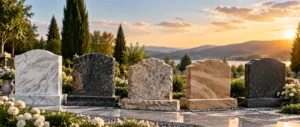
Granite stone and marble are among the most commonly used natural headstone materials, offering different characteristics in terms of durability, appearance, and engraving possibilities. Selecting the right stone depends on the intended memorial design, environmental conditions, and manufacturing requirements.
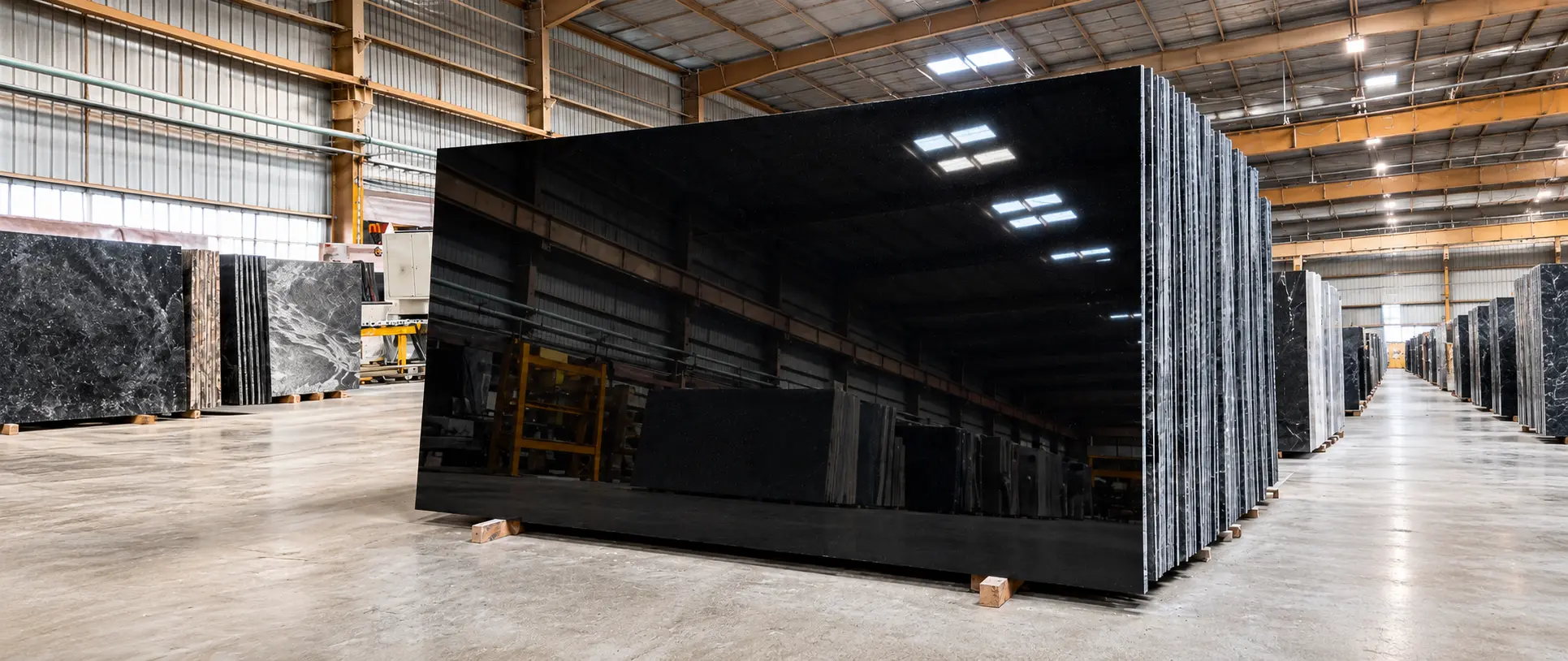
Black Granite Headstones
Black granite is a popular choice for headstone manufacturing due to its durability, polished appearance, and suitability for detailed inscriptions.Its dark surface provides strong contrast for engraved lettering, portraits, and decorative designs, particularly when the engraving technique creates lighter markings against the polished background.
Key advantages include:
- Weather Resistance: Dense, low-porosity varieties generally perform well under long-term outdoor exposure.
- Engraving Contrast: Dark polished surfaces can provide excellent visibility for laser-etched portraits and detailed inscriptions.
- Refined Appearance: Deep black tones create a formal, elegant appearance suitable for traditional and contemporary memorial designs.
For manufacturers and international buyers, Iranian black stone varieties, including commercially marketed Natanz Black Granite, may offer sourcing opportunities. However, mineral composition, technical performance, and engraving quality should be verified for the specific material.
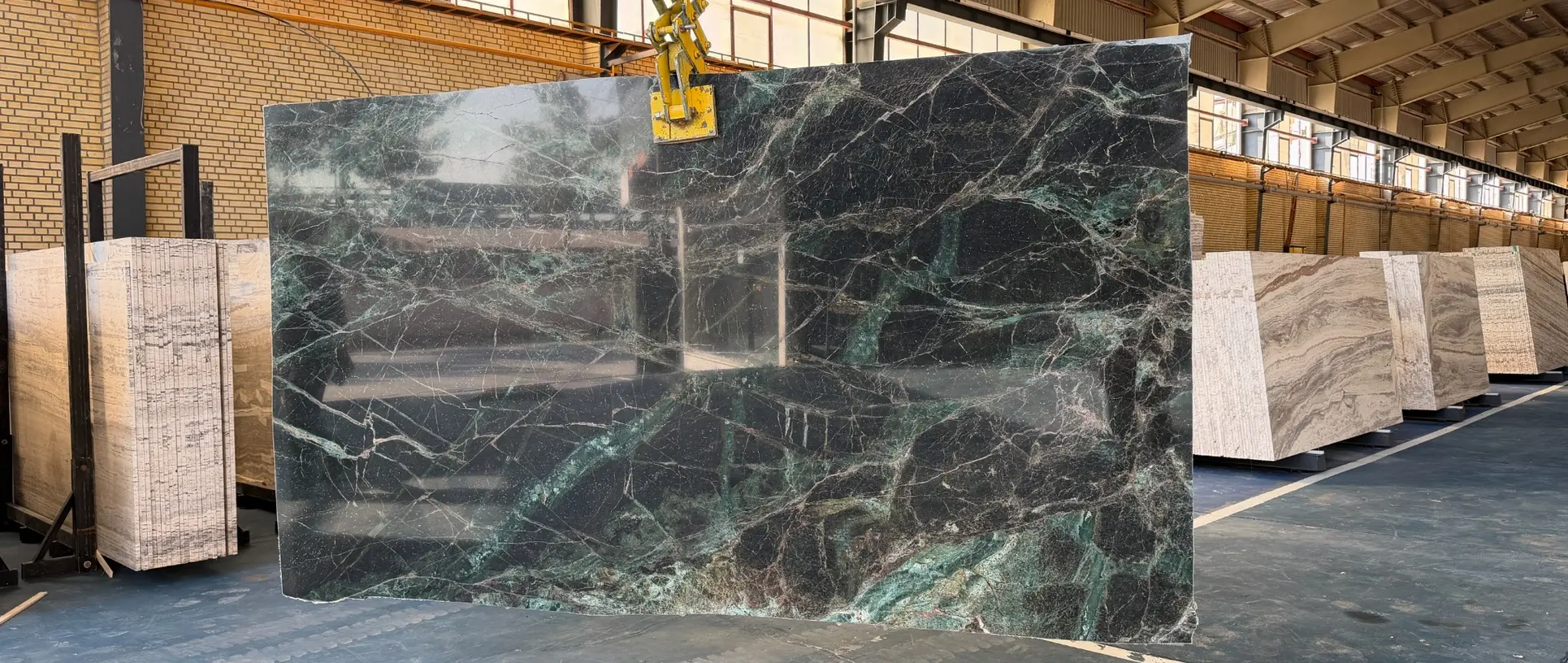
Grey Granite Headstones
Grey granite offers a practical alternative for headstones requiring a lighter appearance while maintaining the durability associated with suitable granite varieties.Its natural grain patterns range from relatively uniform light grey to darker, speckled surfaces, providing different design possibilities.
Grey granite is commonly used for upright headstones, flat grave markers, and larger cemetery monuments.For manufacturers, selecting a consistent grain pattern and suitable surface finish is particularly important because the visibility of engraved text depends on the contrast between the inscription and the surrounding stone.
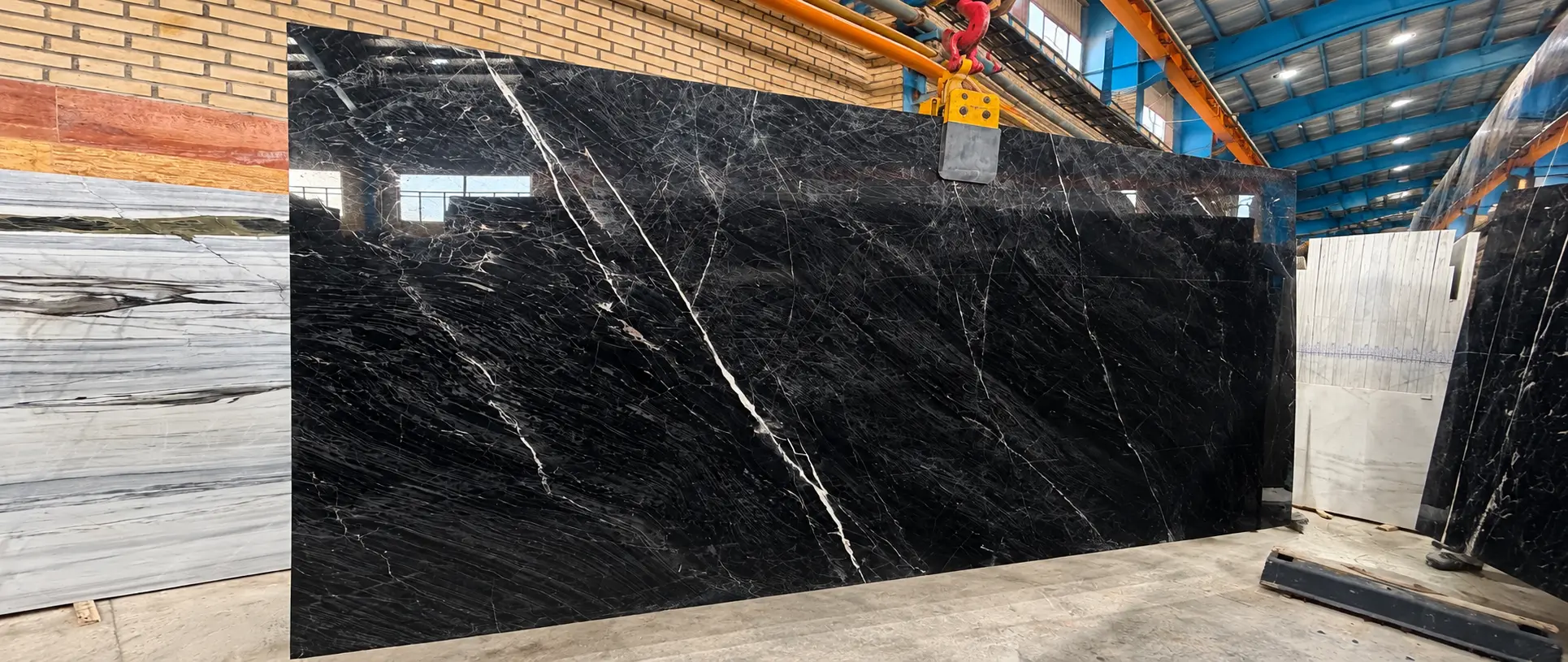
Marble Headstones
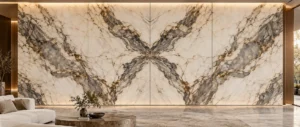
Marble headstones are valued for their classical appearance, natural veining, and suitability for detailed stone carving.White and light-colored marble are often associated with traditional memorials, sculpted monuments, and decorative architectural elements.
Compared with granite, marble is generally softer and more susceptible to surface deterioration caused by acidic rain and environmental pollutants. As a result, carved inscriptions may gradually lose definition in exposed outdoor conditions.
Marble remains an option for projects that prioritize traditional aesthetics and sculptural details, provided its weathering characteristics and maintenance requirements are carefully considered.
Selecting Stone for Headstone Production
For manufacturers sourcing natural stone in bulk, the choice should extend beyond appearance. Block dimensions, slab thickness, material consistency, surface defects, and compatibility with cutting and engraving equipment can influence production efficiency.
MOT Stone helps international buyers explore Iranian granite and marble sourcing options based on their material preferences, required dimensions, quantities, and processing needs.
Granite vs. Marble for Headstones: Which Is Better?
When comparing headstone materials, granite is generally the more durable option for long-term outdoor use, while marble is often selected for its traditional appearance and carving characteristics. However, the final choice should consider climate conditions, engraving requirements, maintenance expectations, and the technical properties of the specific stone.
The following table highlights the main differences between granite and marble for headstone manufacturing.
| Comparison Factor | Granite | Marble |
|---|---|---|
| Durability | Generally highly resistant to wear and weathering | More vulnerable to surface deterioration over time |
| Water Absorption | Typically low in dense, sound varieties | Varies by stone; some varieties absorb more moisture |
| Weather Resistance | Usually performs well in outdoor environments | More sensitive to acidic rain and environmental pollutants |
| Engraving | Suitable for laser etching, sandblasting, and mechanical engraving | Well suited to traditional carving and sculptural details |
| Appearance | Available in black, grey, and other colors, often with a polished finish | Known for light colors, natural veining, and a classical appearance |
| Maintenance | Generally requires less maintenance | May require more frequent cleaning and surface care |
| Typical Applications | Outdoor headstones, grave markers, cemetery monuments | Traditional memorials, carved monuments, decorative headstones |
Which Material Should You Choose?
For headstones exposed to outdoor conditions over many years, granite is generally the preferred choice because of its durability and resistance to environmental deterioration. Black granite is particularly suitable for designs requiring high-contrast inscriptions and detailed engraved images.
Marble may be a suitable alternative when traditional aesthetics, intricate carving, or sculptural details are the main priorities. However, its greater sensitivity to weathering should be considered, especially in regions exposed to acidic precipitation.
For manufacturers and distributors, evaluating actual stone samples and technical specifications is essential before selecting materials for large-scale production.
Read more: What Is Granite?
Popular Headstone Colors and Finishes
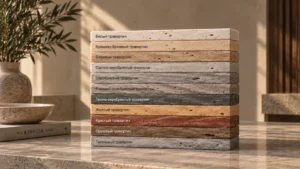
Color and surface finish play an important role in the appearance, engraving visibility, and overall design of a memorial. While black, grey, and white remain common choices, the combination of stone color and finishing technique can significantly influence the final result.
For headstone manufacturers and distributors, selecting suitable headstone materials involves considering both visual preferences and compatibility with engraving and processing methods.
Popular Headstone Colors
- Black: A popular choice for modern and traditional headstones. Polished black stone creates a strong contrast for light-colored inscriptions, laser-etched portraits, and decorative engravings.
- Grey: Available in light and dark shades, often with visible natural grain patterns. Grey headstones offer a neutral appearance suitable for simple and traditional memorial designs.
- White: Commonly associated with marble memorials and sculpted monuments. White stone offers a classical appearance, although engraved lettering may require additional contrast for better visibility.
Common Surface Finishes for Headstones
The selected surface finish affects the stone’s reflectivity, texture, and suitability for different engraving techniques.
| Surface Finish | Visual Appearance | Typical Application |
|---|---|---|
| Polished | Smooth, glossy surface with enhanced color depth | Black granite headstones, engraved portraits, and formal memorials |
| Honed | Smooth, matte surface with minimal reflection | Contemporary and minimalist headstone designs |
| Flamed | Rough, textured appearance, typically used on suitable granite varieties | Decorative edges and selected non-engraved surfaces |
| Bush-Hammered | Coarse, uniformly textured surface | Traditional monuments, borders, and architectural details |
Choosing the Right Color and Finish
For detailed inscriptions and portraits, polished black granite is often preferred because of its strong visual contrast and compatibility with suitable engraving techniques. Matte and textured finishes can create a more understated appearance, but engraving clarity should be tested on the selected stone.
Manufacturers should also consider color consistency across production batches, particularly when sourcing slabs or blocks for wholesale headstone manufacturing.Ultimately, the best color and finish combination depends on the memorial design, engraving method, and the expectations of the target market.
How to Choose Stone for Headstone Manufacturing
Selecting natural stone for headstone manufacturing requires careful consideration of material quality, dimensions, processing efficiency, and supply consistency. For manufacturers and wholesale buyers, choosing suitable headstone materials directly affects production costs, material waste, and the quality of finished memorials.
Before purchasing granite or marble blocks and slabs, buyers should evaluate the following factors:
- Block and Slab Quality: Inspect the stone for visible cracks, structural weaknesses, excessive color variations, and processing defects. High-quality raw materials help reduce production problems and unexpected waste.
- Dimensions and Thickness: Select blocks or slabs that accommodate the required headstone sizes and shapes. Appropriate dimensions can improve cutting efficiency and minimize unnecessary material loss.
- Processing and Engraving Compatibility: Confirm that the selected stone is suitable for the intended cutting, polishing, and engraving equipment. Testing sample pieces helps manufacturers evaluate processing performance before placing large orders.
- Material Yield and Waste Reduction: Consider how many finished headstones can be produced from each block or slab. Natural fractures, irregular dimensions, and cutting requirements can influence the usable material yield.
- Supply Consistency: For ongoing production, verify material availability, color consistency, and the supplier’s ability to provide matching stone for future orders.
- Packaging and Transportation: Confirm that blocks and finished slabs can be safely packaged and transported according to their dimensions, weight, and destination requirements.
Why Material Inspection Matters Before Bulk Orders
For large-scale headstone production, reviewing photographs or small samples alone may not provide sufficient information about an entire shipment.Buyers should establish clear specifications for stone dimensions, acceptable color variations, surface quality, and structural condition. When possible, inspection of the actual blocks or slabs before shipment helps identify discrepancies and reduce production risks.
Working with an experienced natural stone supplier can also simplify communication between quarry operators, processing facilities, and international buyers.MOT Stone supports international customers in exploring Iranian granite and marble sourcing options, helping coordinate material selection, processing requirements, and export arrangements for headstone manufacturing projects.
Conclusion: Sourcing Headstone Materials with MOT Stone
Choosing the right headstone materials requires balancing durability, appearance, engraving quality, and long-term performance. Granite is generally preferred for its weather resistance and low maintenance, while marble remains a suitable option for traditional and decorative memorial designs.
MOT Stone helps international manufacturers, importers, and distributors source Iranian granite and marble through its network of quarry and processing partners. The company supports the procurement of raw blocks, processed slabs, and custom-cut stone based on specific production requirements.
From material selection and quality inspection to processing and export coordination, MOT Stone helps simplify natural stone sourcing for international buyers. Contact MOT Stone to explore available granite and marble options and discuss your headstone manufacturing requirements.
Frequently Asked Questions About Headstone Materials
What is the best natural stone for headstones?
Granite is generally considered one of the best headstone materials because of its durability, weather resistance, and suitability for detailed engraving. However, the best choice depends on climate conditions, memorial design, and the specific stone’s properties.
Is granite or marble better for a headstone?
Granite is usually better for long-term outdoor use because it is more resistant to weathering and requires less maintenance. Marble offers a traditional appearance and is suitable for detailed carving, but it is more vulnerable to deterioration from acidic rain and environmental exposure.
Why is black granite popular for headstones?
Black granite is popular because its polished surface creates strong contrast for inscriptions, decorative engravings, and laser-etched portraits. Its durability and refined appearance also make it suitable for various memorial designs.
What thickness is recommended for granite headstones?
There is no universal thickness suitable for every granite headstone. The required thickness depends on the monument’s dimensions, design, installation method, cemetery regulations, and structural requirements. Manufacturers should confirm these specifications before cutting the stone.
Can I source granite and marble for headstone manufacturing from Iran?
Yes. Iran offers granite and commercial marble varieties suitable for headstone manufacturing, subject to material testing and project requirements. MOT Stone helps international buyers explore available blocks, slabs, and custom-cut stone options while coordinating sourcing and export arrangements.